
A test print tells you what the eye misses
On a live production line, small faults can hide inside a file until the final metres are already moving through the printer. A neat pattern sheet makes those faults easier to spot before the job reaches the queue in full.
That is the practical value of test patterns. They expose banding, missing nozzles, skew, overlap errors and colour drift in a controlled way. A print shop in Midrand may see a clean image on one side of a panel and a slight shift on the other side, which often points to carriage alignment or feed control rather than the artwork itself.
When the pattern is checked before production starts, operators get a chance to correct the setup while there is still time to save substrate and ink. It is a small step but it can spare a long reprint later in the day.
Alignment faults show up fast on a patterned sheet
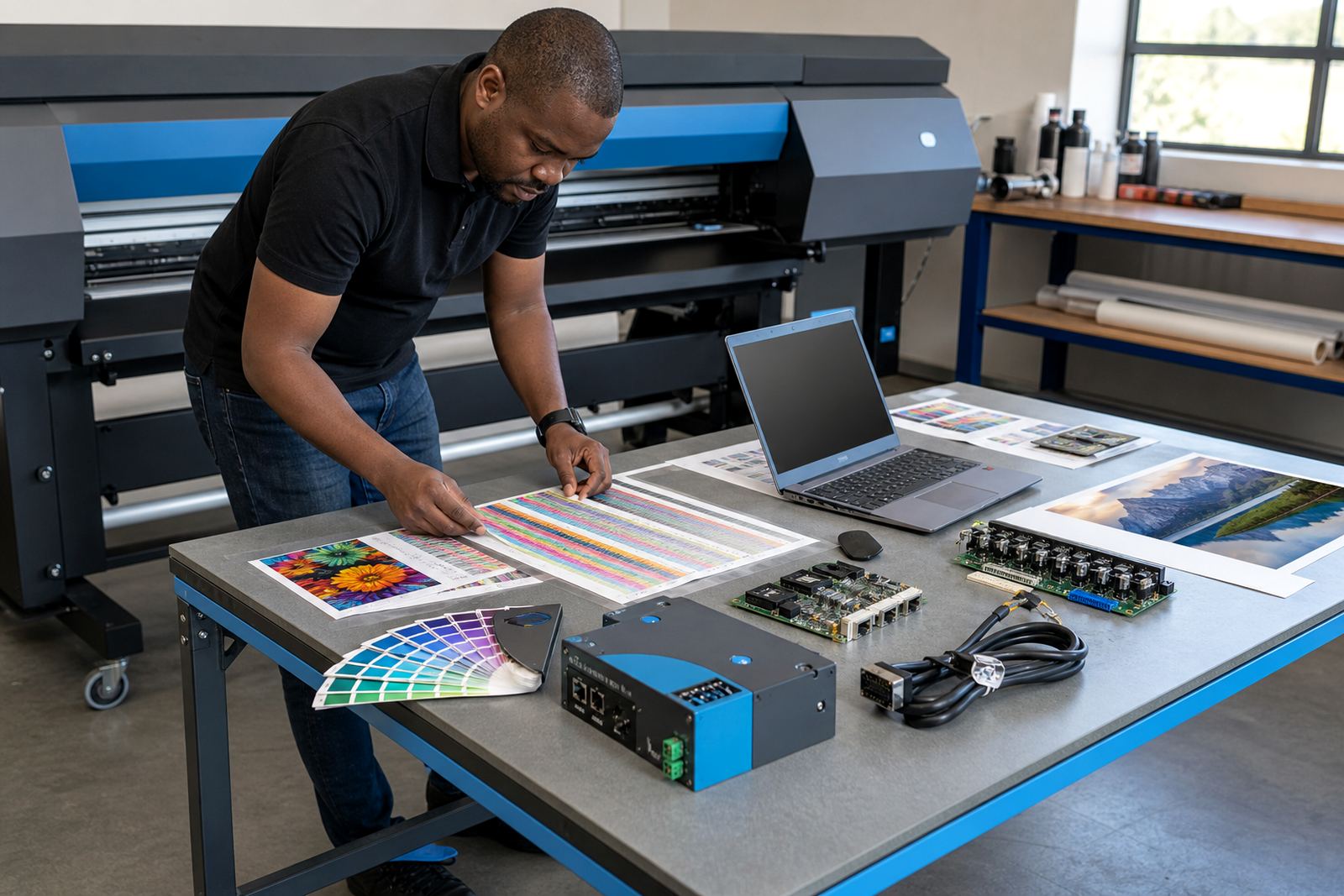
Printer control boards and printhead drivers manage timing, firing and movement. When those elements are even slightly off, a test pattern makes the problem visible in straight lines, stepped blocks and repeated marks.
- Misaligned heads often show as double edges or broken verticals.
- Feed issues can appear as light and dark bands across the length of the print.
- Timing faults may show one colour landing a fraction ahead of another.
- Blocked nozzles can leave thin gaps in a solid bar or grid.
These signs matter in wide-format work because the fault usually grows more obvious over longer runs. A short A4 sample may look acceptable, yet a 10 metre banner can reveal drift that would spoil the whole job. Pattern checks give the operator a chance to correct the setup before that happens.
Colour profiles only help when the printer is behaving properly
Colour profiles are valuable, but they work best after the printer is feeding evenly and the heads are firing cleanly. If the machine is drifting or the media is not tracking square, the profile can only do so much.
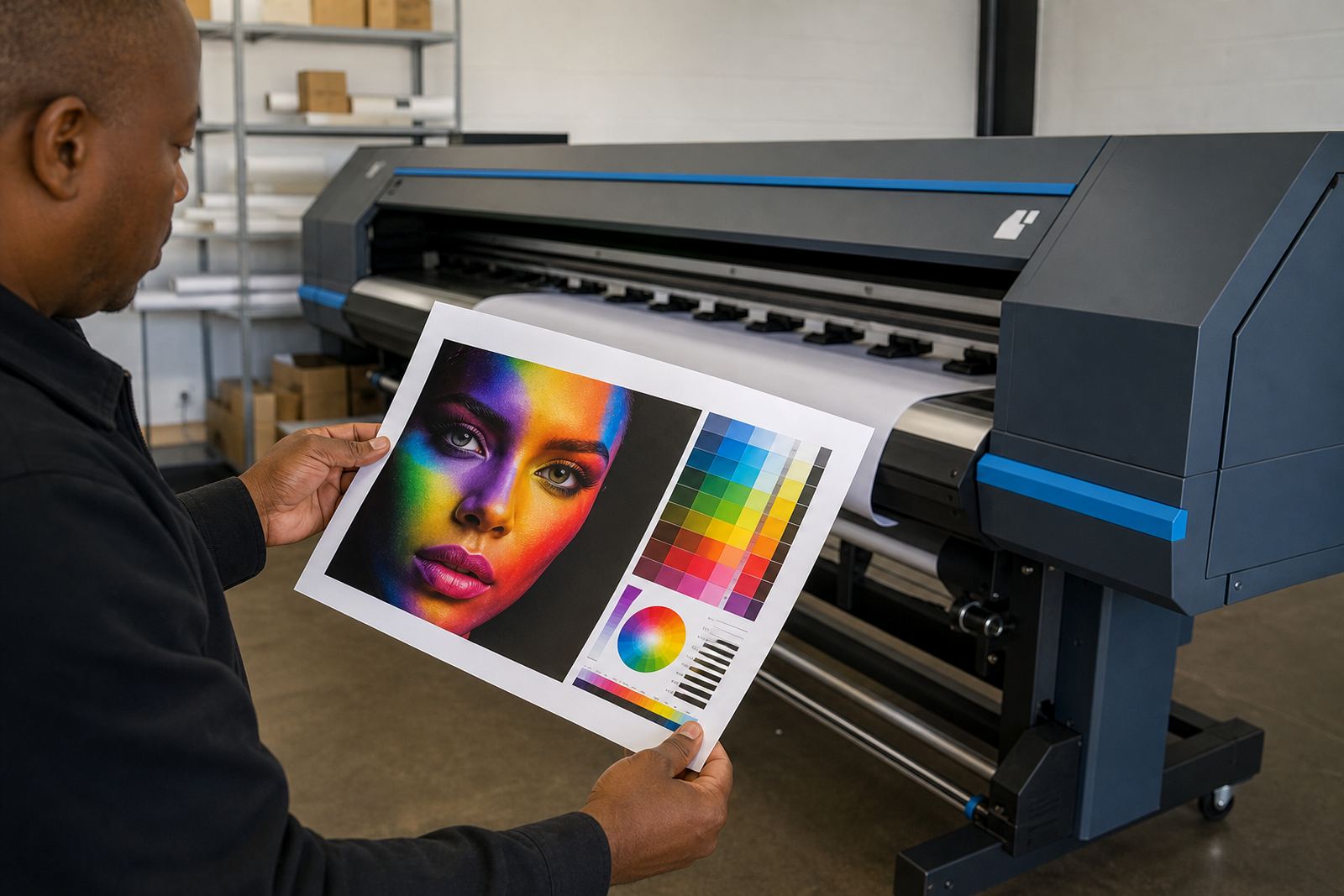
A good test pattern helps verify the base condition first. Once that is stable, the colour workflow can be matched to the media and ink set with far better results. That is especially useful for print shops handling vehicle graphics, retail signage and exhibition panels where a client will spot even a slight shift in skin tones or brand colours.
In coastal towns such as Durban, humidity can change how some media behaves during the day, so a quick pattern check before a long run is worth the time. The print may look fine at 8 am and then move slightly by late afternoon if feed tension or environmental conditions change.
A cleaner queue starts with small checks before the big job
Test patterns are also useful for queue workflow. They let the operator see whether the machine is ready for a high value run or whether maintenance should happen first. That reduces mid-job interruptions and keeps the production order sensible.
- Print a pattern after head cleaning to confirm the result.
- Run a feed check when changing media thickness or roll width.
- Use a colour bar when switching between materials with different coatings.
- Check the pattern after power interruptions or controller resets.
For shops in Johannesburg and Pretoria, where multiple jobs may be stacked onto one machine, that discipline makes it easier to plan the day. The pattern does not waste time, it saves time by showing which job is safe to release and which one needs attention first.
Maintenance staff read patterns like a road map
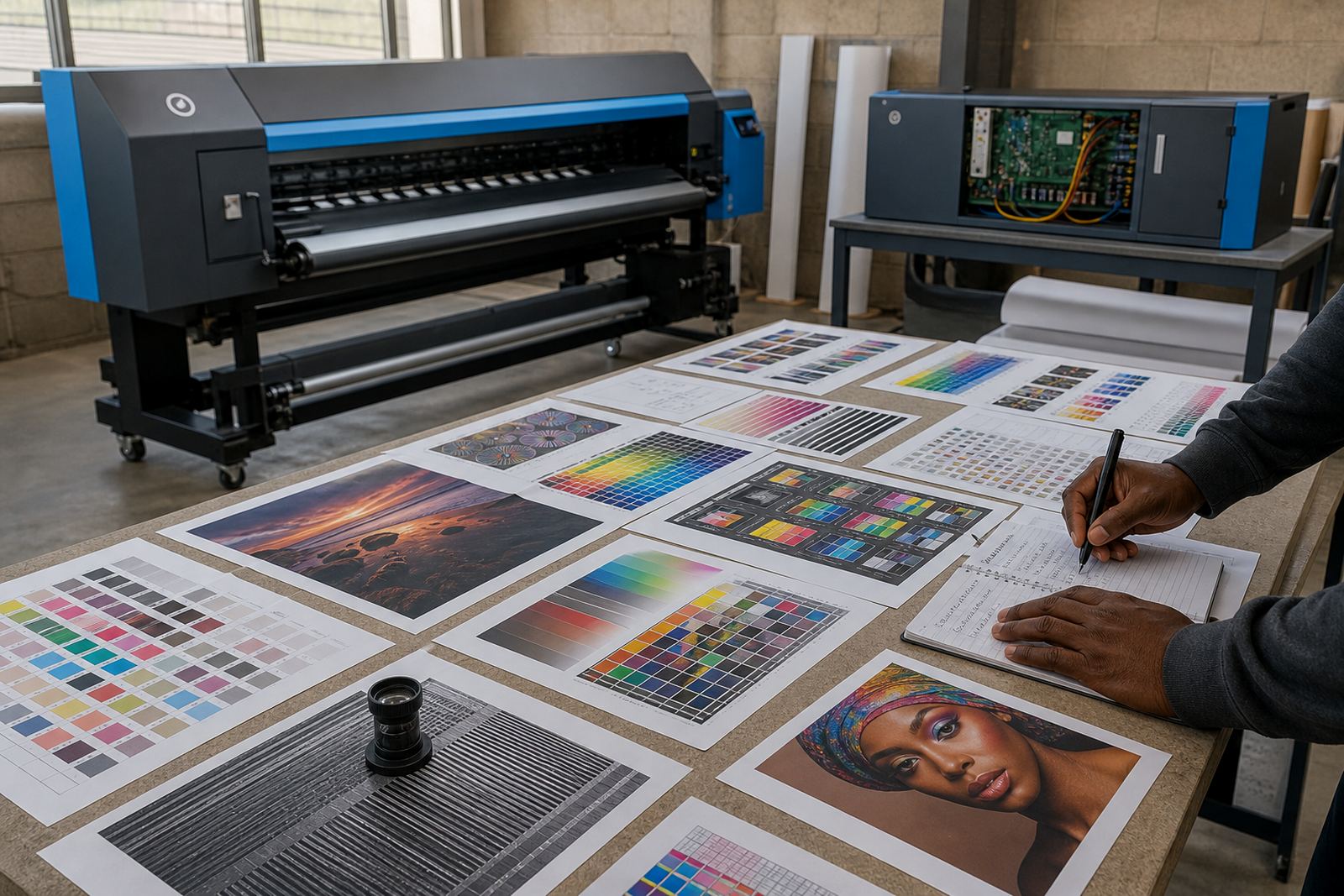
Preventive maintenance is easier when test patterns are recorded and compared over time. A small change this week can point to a worn wiper, a feed roller that needs attention or a head that is beginning to lose consistency.
Maintenance teams do not need guesswork. A set of repeatable patterns creates a record that shows what changed and when it changed. That helps with fault finding, board inspection and printhead driver checks. It also supports operator training because the team learns what normal looks like on that specific machine, not just in theory.
On a busy production floor in Midrand, a technician may see the same pattern every morning before the first roll goes in. That habit gives the team a clean reference point and makes later troubleshooting far less messy.
A Bloemfontein run that saved a day of reprints
A wide-format shop handling exhibition panels in Bloemfontein noticed a slight shift in a test strip before the main sheets were released. The image still looked usable at a glance, but the pattern showed colour spacing that was not sitting square across the width of the media.
The operator stopped the run, checked the queue and the printhead driver settings, then adjusted the feed and reran the pattern. The correction took less time than a full reprint would have taken, and the final panels held their colour and alignment through the job. That is the real value of a short check print. It protects material, avoids rework and keeps the schedule under control.
For shops working across South Africa, the lesson is plain. Test patterns are not an extra step for neatness. They are part of keeping production accurate when the next job is already waiting.
What a useful pattern should show before production starts
A useful pattern does more than confirm that ink is on the page. It should give the operator a quick read on machine condition, colour stability and media tracking before the full artwork is released.
- Straight lines should stay straight from edge to edge.
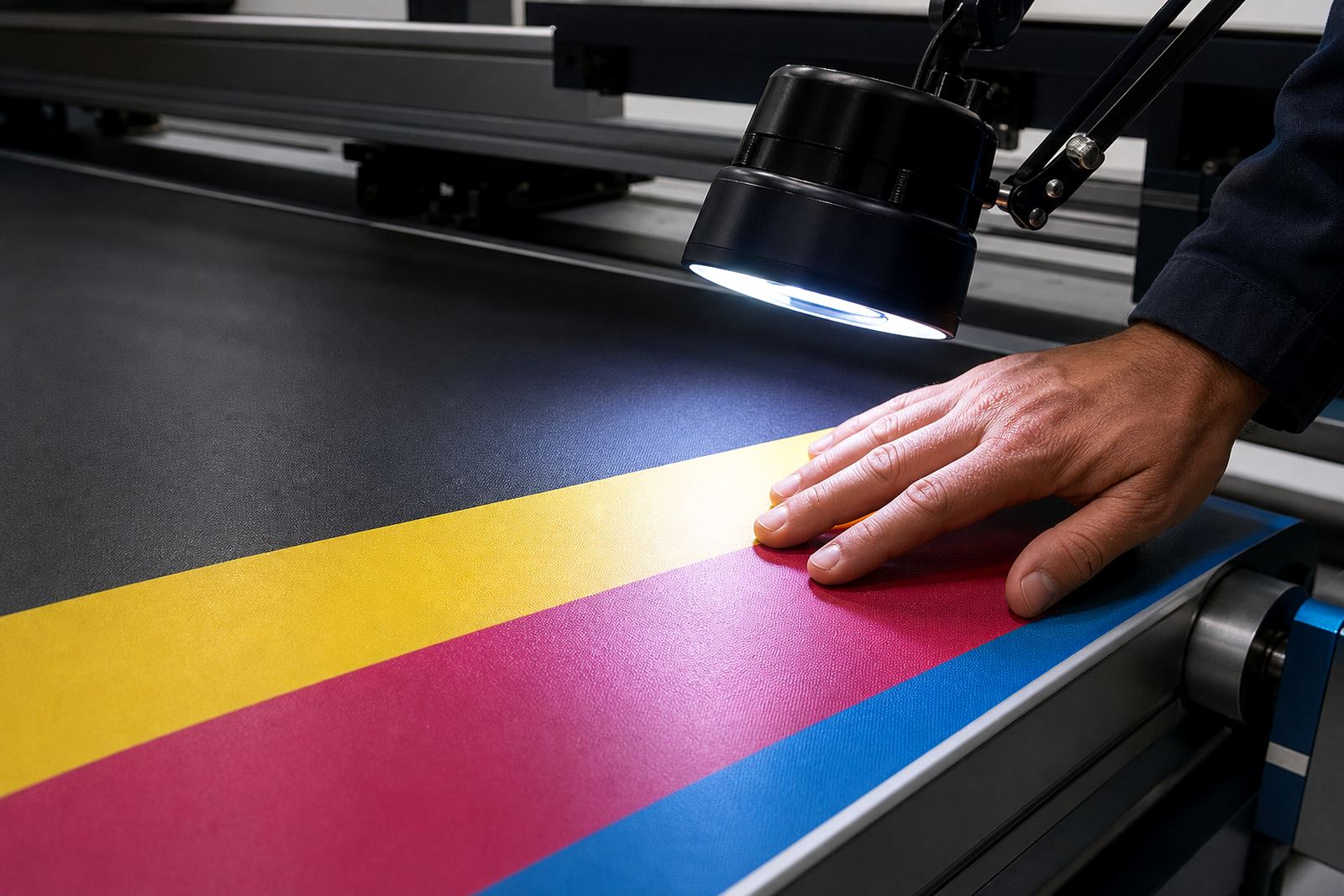
- Solid blocks should look even, not striped or patchy.
- Register marks should line up cleanly across colours.
- Small text in the test area should remain readable.
- Repeat marks should appear at equal spacing across the sheet.
If those points are not holding, the printer needs attention before the production file moves ahead. That is where control board setup, RIP settings and operator training meet practical shop work. When the pattern is right, the rest of the job has a far better chance of staying right too.