Where the work began in Midrand
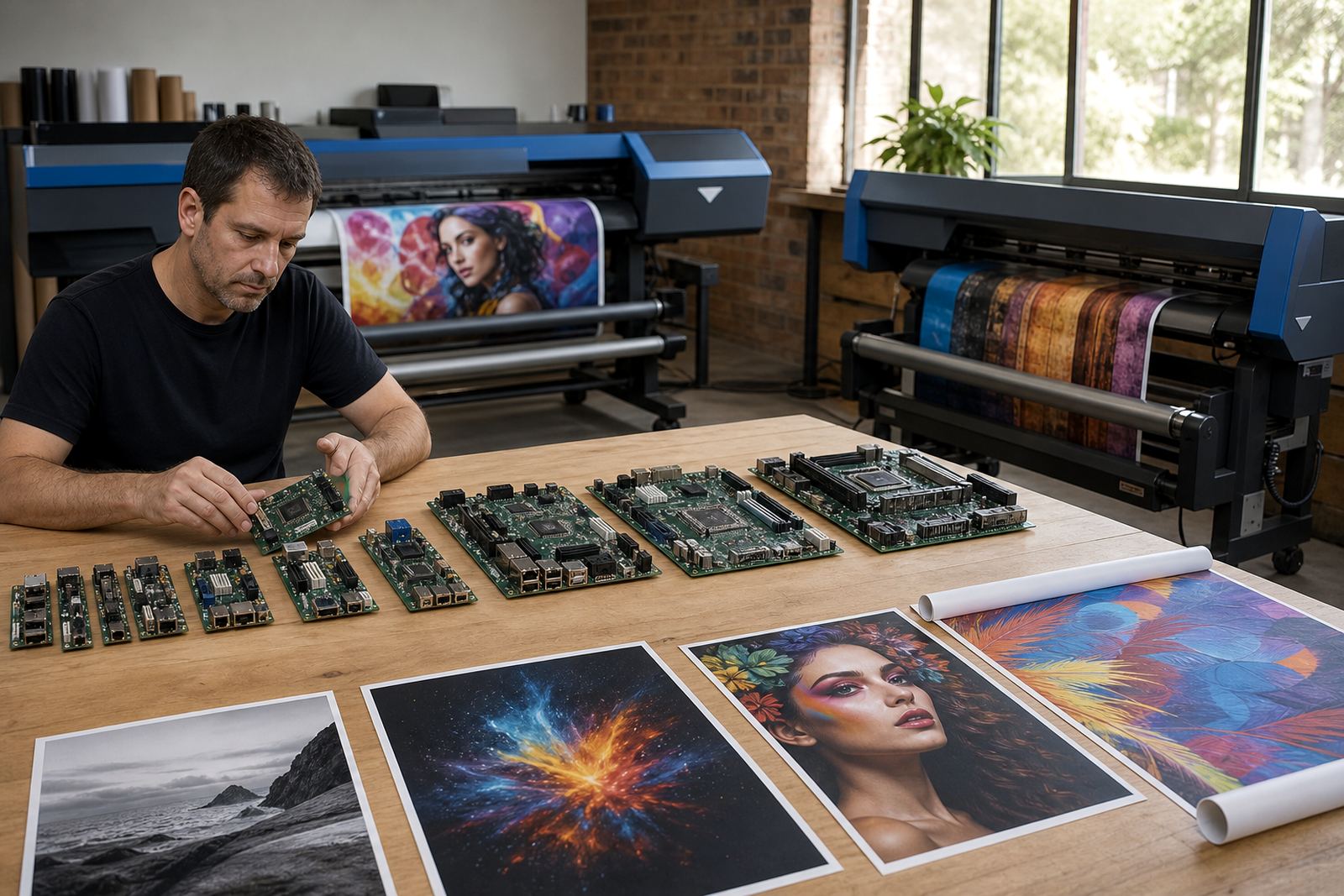
Customers kept bringing in the same headache: print jobs that would not stay in sync from board to software to output. In Midrand, Gauteng, InkFlow RIP grew out of that practical need in 1992, helping wide-format print shops keep printer control boards, printhead driver setup and RIP configuration working together properly. The work focused on steadier output and cleaner colour across banners, signage, labels and display work, so operators could trust the process more and spend less time chasing faults.
That starting point shaped the business in a direct way. Instead of treating software as an isolated tool, the team learned to look at the full print path, from file preparation through to head firing, queue handling and maintenance routines. That approach still guides the work today, especially where local production teams need practical support rather than vague advice. In coastal cities the humidity can affect media handling and print consistency, while inland shops often deal with dust, heat and busy shift patterns, so the setup has to suit the room and the machine, not just the software menu.
The craft that grew around wide-format production
Over time the work moved beyond installation and into the details that determine day to day reliability. Colour profile setup, queue workflow design, nesting, fault finding and preventive maintenance became part of the normal service mix because they solve the problems print shops face after the first install has been completed. A good RIP file is only useful if the operator can run it under pressure, find the right queue without confusion and keep colour steadier from one job to the next.
The craft also grew through the realities of local production. Some customers run short urgent signage jobs, others push long production runs for retail, exhibitions or commercial display. In both settings, the team learned to balance accuracy with throughput and to keep a close eye on board behaviour, head data and operator habits. That balance matters when a machine is expected to print consistently across different media, different shifts and different levels of staff experience.
- Printer control boards for wide-format inkjet systems
- RIP software setup for production and colour control
- Printhead driver configuration for stable output
- Queue workflow design for cleaner job handling
- Backup and recovery planning for production continuity
Who the service grew to serve
The customer base expanded from a few local print rooms to a wider mix of graphic designers, print shops and larger production facilities across South Africa. Some need a full installation, others want help sorting a stubborn board fault or rebuilding a queue after a workstation change. Many arrive with a machine that prints, but not quite the way it should, which means the work often starts with fault finding and ends with a tighter workflow that the operator can actually use.
Johannesburg and Pretoria print rooms often need fast practical tuning because the volume is high and the pressure on turnaround is constant. Durban and Cape Town shops may have to deal with moisture, salt air and media storage issues. Bloemfontein and other inland centres often bring a different set of environmental and workflow questions. The same tools are used, but the way they are set up changes with the room, the team and the job mix.
- Midrand Support for hands-on local assistance
- Johannesburg Support for busy production floors
- Pretoria Support for board and RIP issues
- Durban Support for coastal print environments
- Cape Town Support for colour and workflow tuning
- Bloemfontein Support for inland production teams
The team around the machines
Today the work is carried by a team with different strengths that fit together in a practical way. Thabo Zungu leads the business with a close understanding of production pressure and technical detail. Lerato Khoza keeps operations organised, Johan Letsoalo handles senior RIP work, Zanele Moagi focuses on colour workflow, Aiden Phiri leads remote support, Kagiso Pienaar repairs boards, and Bianca Rademeyer coordinates client training.
That mix matters because no two jobs look the same. One customer may need a board installed and tested, another may need profile work and a better nesting setup, while a third needs operator training so the same mistakes do not keep showing up on the line. The team works by listening to the machine behaviour, checking the file path and adjusting the process until the output matches the production goal. It is careful work, and it depends on people who know where small faults usually hide.
How remote support became part of the service
As print shops spread across the country, remote setup and support became part of the everyday service rather than a side offering. Many issues can be traced through software settings, queue design, profile selection or operator steps, which means the team can often guide a shop through the fix without waiting for a physical visit. That makes a real difference when production is busy and the machine has to keep moving.
Remote support is most useful when it sits on top of solid installation practice. If the board is wired correctly, the driver settings are set properly and the RIP queues are organised in a clear way, the whole system becomes easier to manage. Backup and recovery also matter, because production teams need a path to restore settings after a workstation problem, power interruption or user error. In South African print rooms, that sort of planning is not optional, it is part of keeping work on the floor.
What stays constant in the day to day work
The story of InkFlow RIP is not really about a single machine or one type of customer. It is about keeping the print process understandable, serviceable and stable for the people who use it every day. That means giving attention to the details that sit behind a clean print: board compatibility, profile choice, driver setup, queue logic and maintenance habits that reduce avoidable interruptions.
Even now, the work remains practical and direct. The team is there for installation, tuning, repair and training, but also for the quieter tasks that keep a production floor steady, such as reviewing a workflow, correcting a profile mismatch or helping an operator learn a better sequence. Customers reach the team through the enquiry form on the contact page, and the same careful approach is used whether the job is in Midrand or in a print shop on the other side of the country.
- RIP Installation for new and changing setups
- Board Installation and repair support
- Colour Profile Setup for repeatable output
- Operator Training for daily production teams
- Preventive Maintenance to reduce interruption
- Ongoing Support for live print environments
The shape of the business today
What began as a focused technical service has become a wider support base for wide-format inkjet printing across South Africa. The Midrand base still anchors the work, but the reach now covers Johannesburg, Pretoria, Durban, Cape Town, Bloemfontein, the East Rand and the West Rand. The practical goal has not changed much: help customers produce accurate prints, manage their workflow and keep their equipment usable under real production pressure.
That history matters because it explains the way the business works now. The service is grounded in machine knowledge, colour discipline and direct support from people who understand print rooms from the inside. It is not about making the process sound complicated. It is about making the process work, job after job, on equipment that has to earn its place on the floor.