
When the head fires cleanly, the job starts cleanly
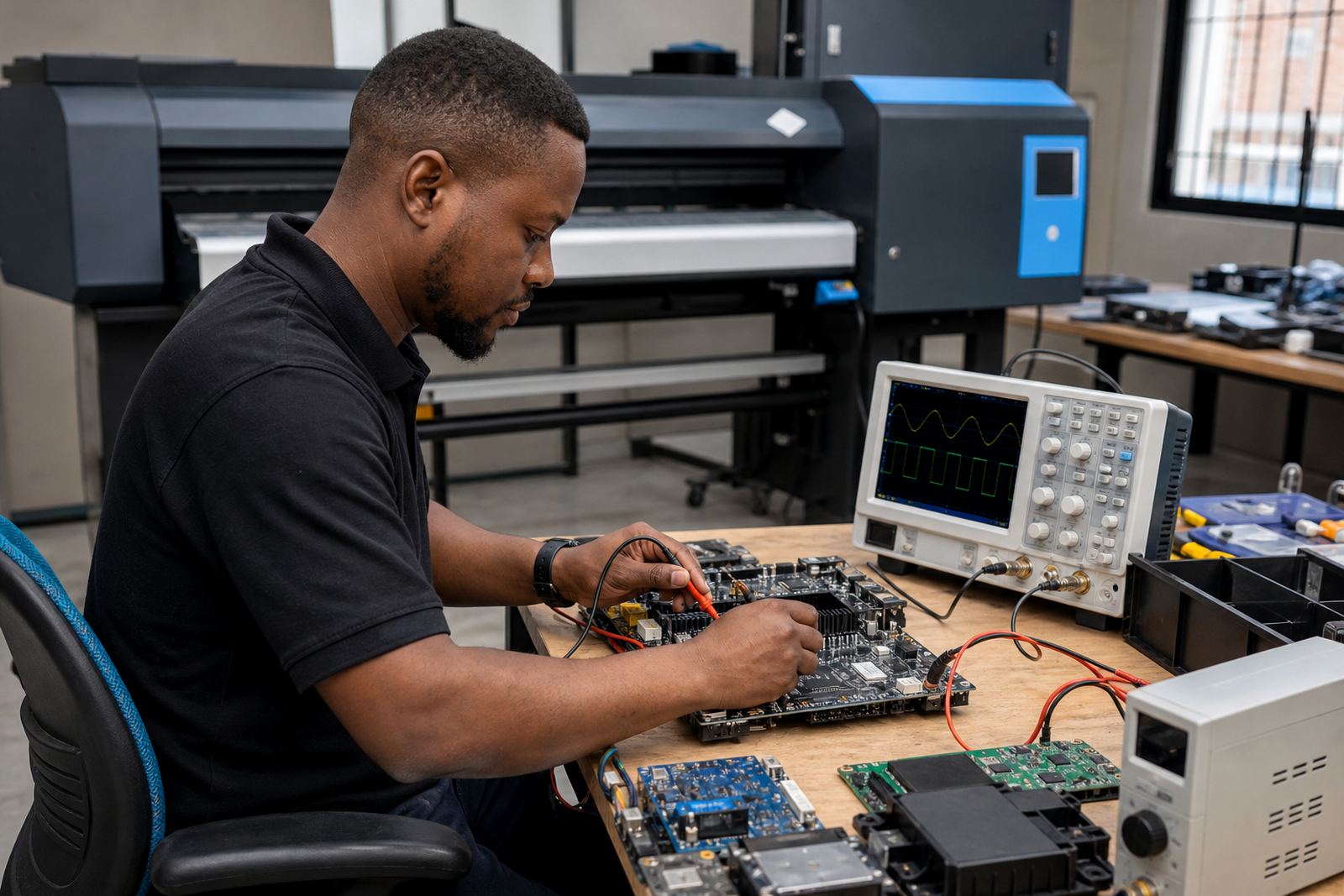
Every droplet begins with a command, and that command has to move from the RIP workflow through the control board and into the printhead driver without distortion. If the signal is late, noisy or uneven, the result can show up as banding, missing lines, rough edges or colour that looks less even from left to right.
In a busy print shop, the cause is not always dramatic. A loose connection, a tired board, a poor earth path or a mismatch in driver settings can be enough to upset the timing. The machine may still print, but it will not print with the same confidence from one job to the next.
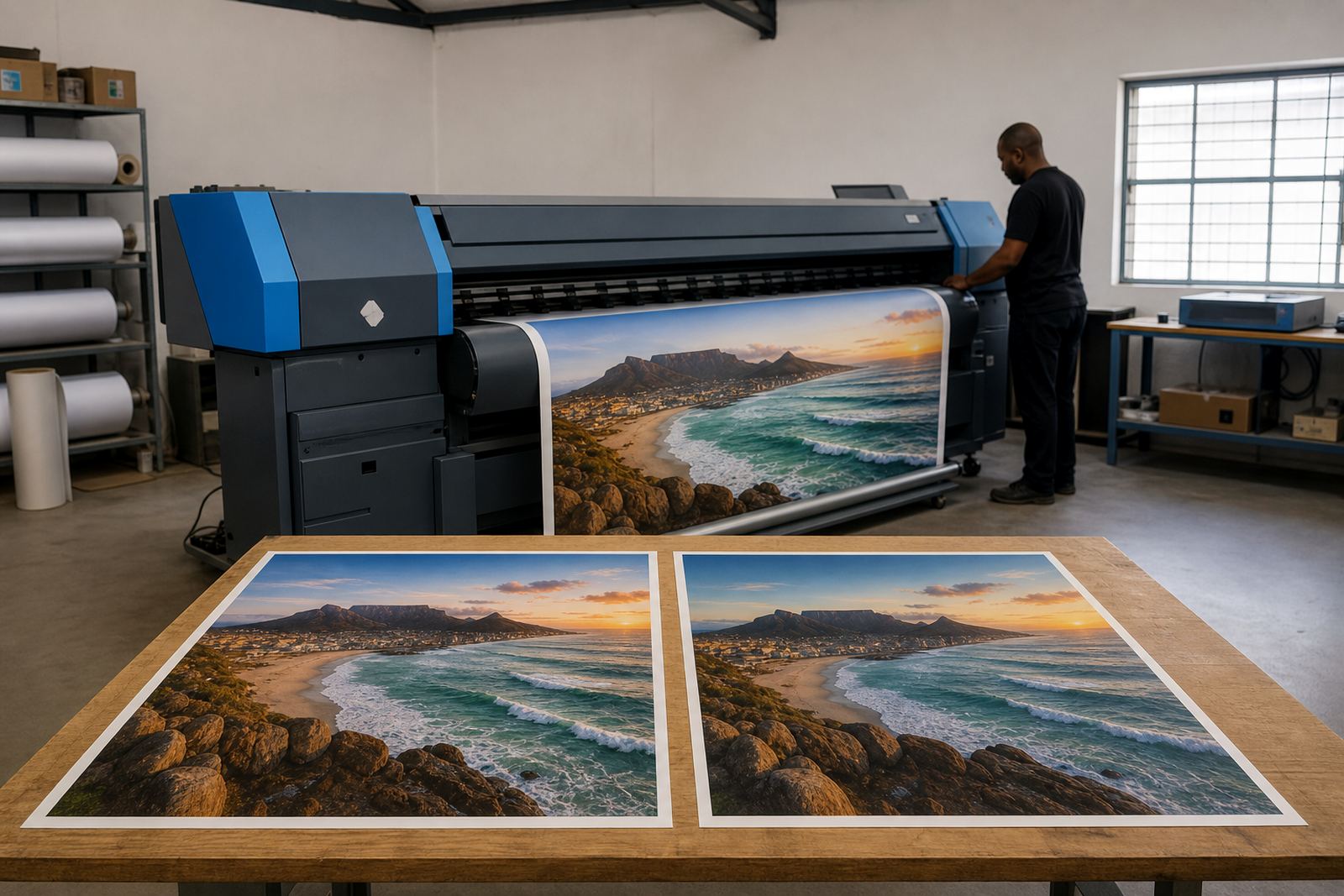
Stable firing also supports consistency on long production work. A 20 metre banner, a set of retail panels or a run of photographic posters needs the same drop placement near the start and near the end. When the signal path stays steady, operators spend less time chasing faults and more time keeping the queue moving.
What usually interrupts the signal path in real production
Wide-format inkjet systems run in demanding conditions. In Midrand and the surrounding industrial areas, dust from loading bays, vibration from nearby equipment and warm rooms can all affect how boards and connectors behave over time. On the coast, humidity adds another layer, especially where print rooms are open to salty air and changing temperatures.
Common trouble points include:
- Loose ribbon cables or connectors that do not lock firmly
- Worn control boards with unstable output on one channel
- Dirty contact points that raise resistance
- Incorrect printhead driver settings for the head type in use
- Damaged insulation or poor shielding near signal wiring
- Grounding problems that allow noise to travel through the system
These issues often show up first as small defects. A faint white line, a missing nozzle pattern that shifts during the shift, or a colour block that looks uneven at one end can all point back to signal instability rather than ink alone.
Colour work depends on timing as much as tone
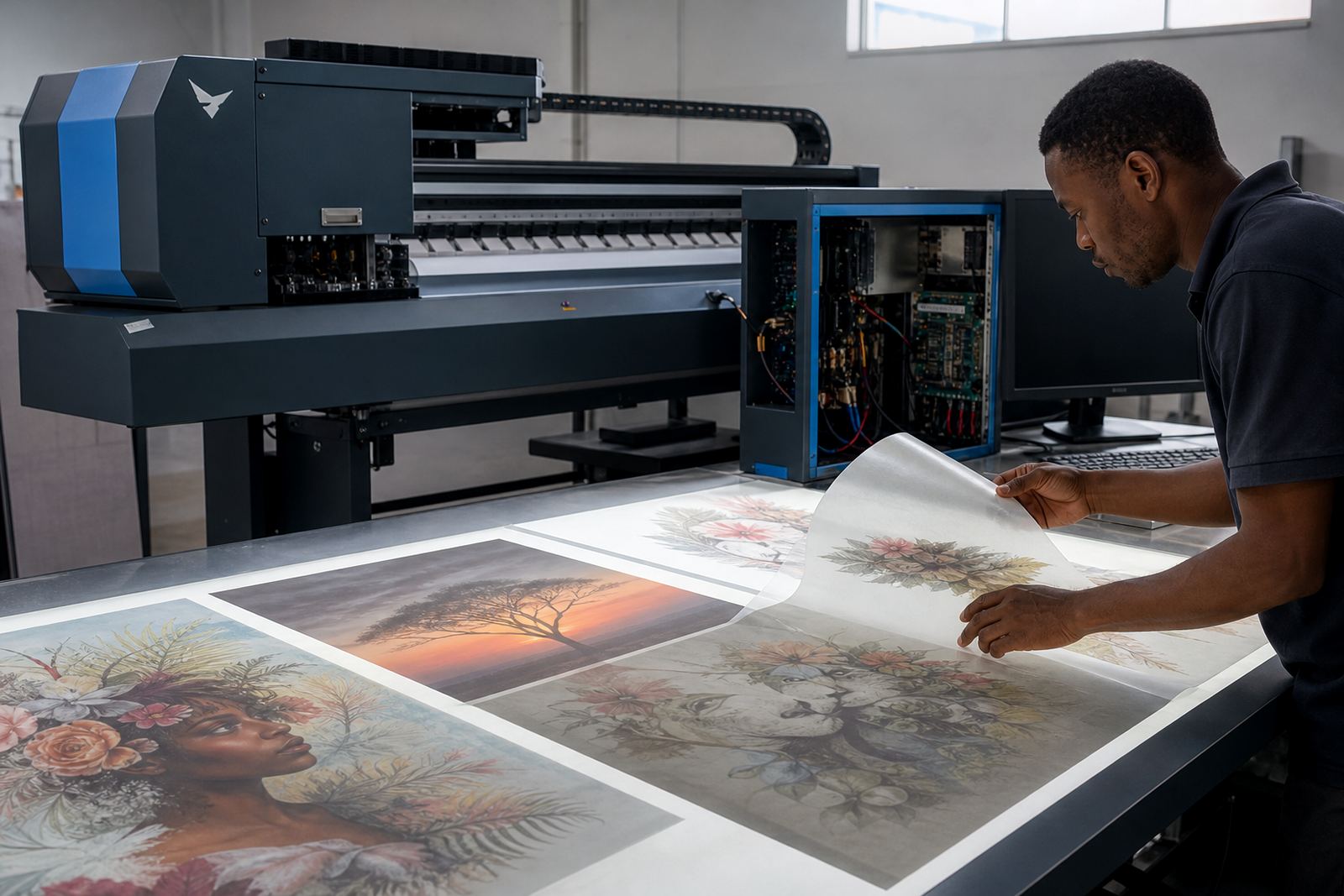
People often talk about colour profiles, but profiles only work properly when the printer can place ink consistently. If the firing sequence is unstable, the profile cannot fully correct the output, because the machine is no longer following the same pattern from one pass to the next.
That matters on jobs where accurate brand colour, skin tone or neutral greys must hold together across panels. A profile may be carefully built for a coated vinyl, backlit film or banner substrate, yet the result still slips if the printhead signals vary. Colour management starts with stable mechanics, then the RIP settings refine the result.
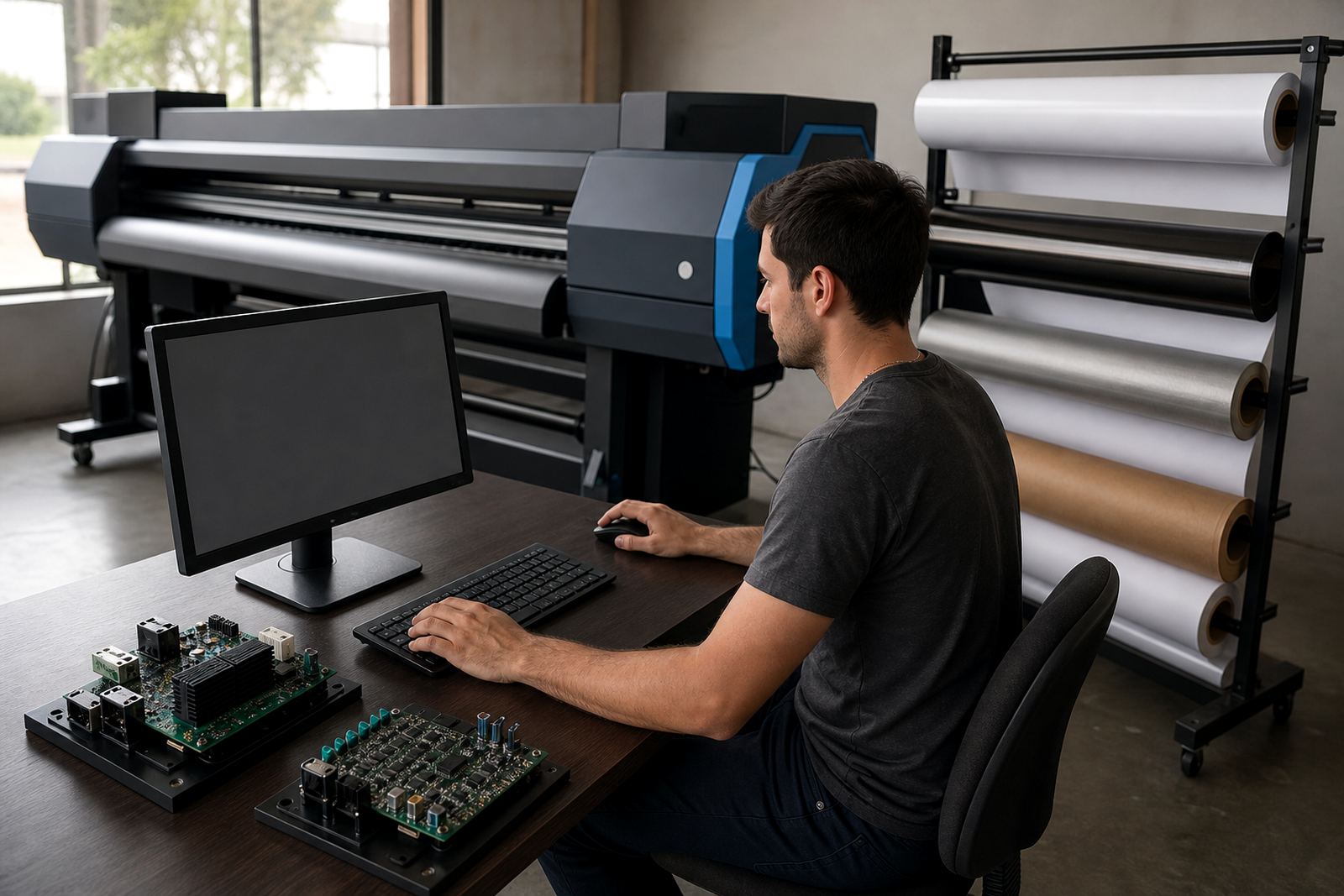
For shops handling mixed work, this means colour profile setup and signal control should be treated as linked parts of the same process. Queue workflow design, printhead driver setup and board performance all affect the final print. When one part drifts, the rest of the system has to work harder to compensate.
The maintenance routine that keeps output steady
Preventive maintenance is not only about cleaning heads or checking ink supply. It also includes the signal path, because a printer can look mechanically sound while still struggling at the board level. A regular check of connectors, cable routing, cooling and board condition helps catch trouble before it spreads into production.
A useful routine usually covers:
- Inspecting signal cables for wear, bends and loose seating
- Checking board mounting points for vibration or heat stress
- Confirming printhead driver settings after a service or replacement
- Testing output channels for uneven response across the carriage
- Reviewing backups so printer profiles and queue settings can be restored
In practical terms, this saves time during a rush. A shop in Pretoria that prints municipal signage, for example, may have tight collection dates and limited room for reprints. When maintenance is done with signal stability in mind, the team is less likely to lose a full shift to troubleshooting.
Remote support works best when the signal map is clear
Many wide-format problems can be diagnosed remotely if the workflow is set up properly. That is why clear board mapping, sensible queue structure and accurate records of printhead driver settings matter. If the operator can describe the symptom, the media, the pass count and the area of the defect, the fault finding process becomes much more direct.
Remote setup also helps when a site in Durban, Cape Town or Bloemfontein needs consistent work across more than one machine. A technician can review the RIP configuration, compare profile use and check whether a recent change in software, board or cable routing has altered the signal path. In many cases, the issue is not the whole printer, only one weak point in the chain.
For production teams, this approach keeps the process practical. It avoids guesswork, supports better backup and recovery, and reduces the chance of repeating the same fault after a reset. When the signal route is understood, support becomes more precise and less disruptive.
A Midrand example from the floor
A print shop in Midrand was running back to back vehicle wrap panels and noticed light streaking that seemed to move through the day. The heads had been cleaned, the ink was fine, and the media had been checked. What finally pointed to the cause was the way the fault appeared only on one carriage path and shifted after longer runs.
After reviewing the board installation, the cable routing and the printhead driver setup, the team found that vibration from nearby equipment was affecting one connection point. The fix was not dramatic, but it mattered. The connection was secured, the routing was tidied, and the RIP queue was adjusted so the same job did not keep stressing the same path.
The result was steadier output, fewer interrupted runs and less time spent on repeat checks. That is the point of clean firing signal delivery. It does not attract attention when it is working, but every sharp edge and even block of colour depends on it.
What a stable signal gives the print room
When the signal path is healthy, the printer behaves in a more predictable way. Operators can trust the queue, compare jobs properly and spend less time making corrections after the fact. For shops producing signage, display work and long production panels, that predictability has real value.
- Sharper detail on fine text and line work
- More even colour across wide panels
- Fewer nozzle pattern surprises during long runs
- Better repeatability after service or board work
- Less wasted material from avoidable reprints
Firing signal stability is not a separate luxury, it is part of dependable print production. If the signal is clean, the printer can do the rest of its job properly, and the workshop gets a steadier result from start to finish.