
Start With The Roll Size You Can Actually Print Through
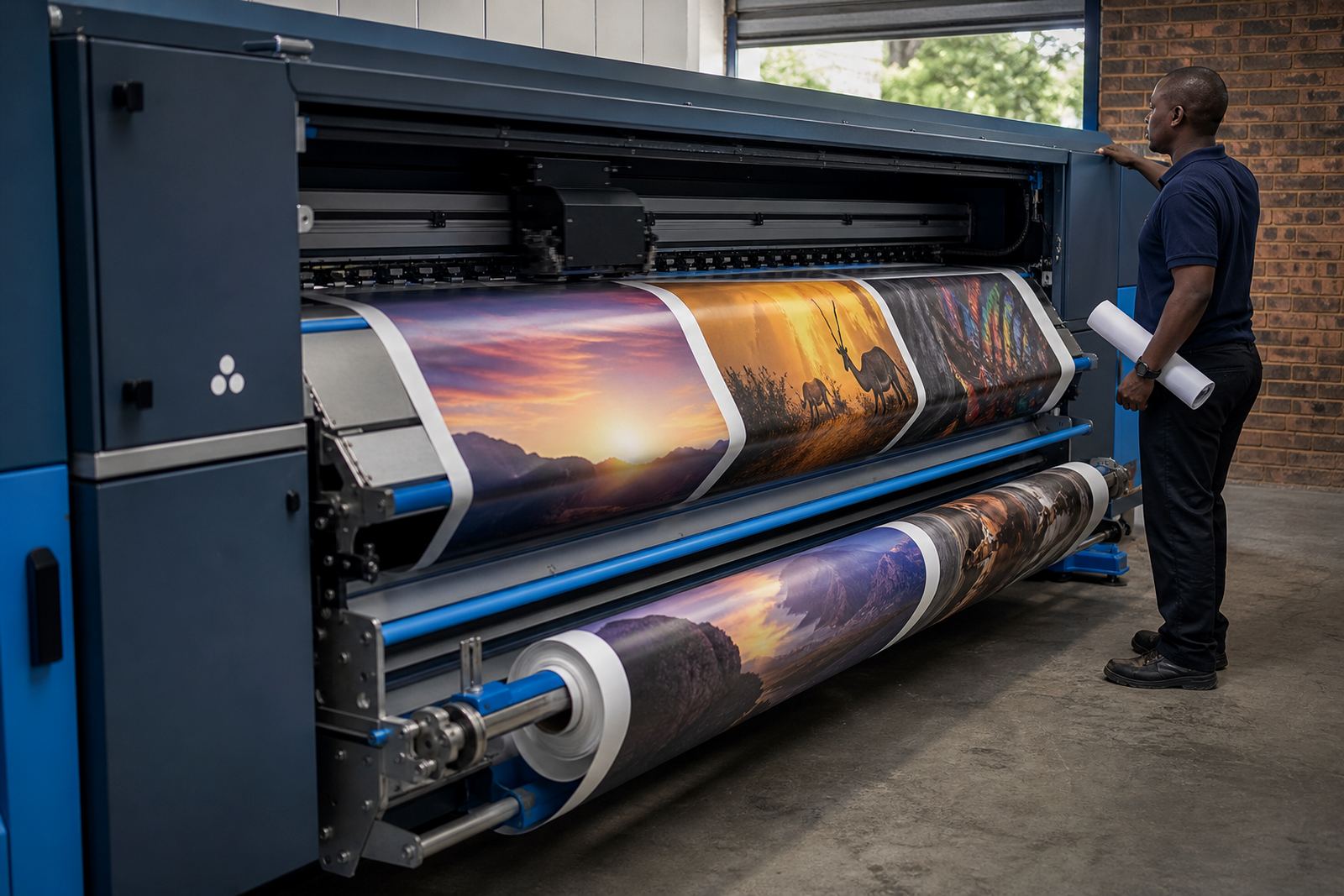
Banner planning begins at the roll, because the roll decides how many metres can move through the printer before a changeover stops the line. A 50 metre roll sounds generous, but if the artwork repeats are poorly nested, you can lose a surprising amount to trim, margin and reprints.
Measure the useful width, check the media edge quality, and confirm whether the job needs hems, eyelets or weld overlap. Those details affect the final cut pattern, not just the print length. On humid days in Durban or coastal Cape Town, media can curl slightly and that changes how the printer tracks the edge.
- Confirm the printable width, not only the roll width.
- Allow extra length for hems, joins and test strips.
- Keep a note of the last usable metre on each roll.
- Separate frontlit, backlit and blockout banner stock in storage.
Keep The RIP Queue Locked To The Job Mix
A long banner run behaves better when the queue is set up with one clear job mix. If short panels, full-width banners and test prints sit together in the same queue, operators spend more time checking colour and media settings than printing. Queue workflow design makes a proper difference on busy shifts in Johannesburg and Pretoria.
Use a dedicated queue for each material type where possible. That keeps ink limits, pass count, curing behaviour and profile choice tied to the right substrate. It also helps when load-shedding interrupts mains power and the operator needs to restore the run without guessing which settings belonged to which file.
- Group by media type, not by customer name.
- Store the correct profile beside each queue preset.
- Keep border settings consistent for repeated sizes.
- Use a clear naming system for reorders and repeats.
Nesting Matters More Than People Think
Good nesting can save metres on a banner run without changing the artwork itself. When the RIP software places multiple pieces across the roll with sensible spacing, you get fewer offcuts and a cleaner cutting sequence. That matters on long jobs for retail fronts, event barricades and building wraps where the same size repeats many times.
The trick is to nest with the finishing method in mind. A banner that will be folded over a pole pocket needs different spacing from one that will be welded and eyeletted. If the nesting ignores finishing, the print may look efficient on screen but cost more on the trimming table. Small mistakes add up quickly when a run stretches across several rolls.
- Use consistent gaps between repeat panels.
- Rotate artwork only when the profile and finish allow it.
- Check crop marks before sending the run.
- Keep a spare metre for test placement after roll changes.
Watch Colour Drift Before It Shows On The Last Roll
Colour drift often shows up late in a banner run, after the first few rolls looked fine. Heat, media variation and printhead condition can shift the output enough to make a navy panel read lighter or a red panel lean too orange. That is why colour profile setup and maintenance checks belong in the planning stage, not only at fault time.
On long production days, the operator should compare the first and later panels under the same light source. If the job includes several sites, such as branches in Bloemfontein or East Rand shopping centres, the final boards and banners should still sit within the same visual range. A stable RIP workflow gives better control over that spread.
- Check colour at the start, middle and end of the run.
- Use the same viewing light for each comparison.
- Keep nozzle checks and cleaning routines on schedule.
- Replace worn boards or cables before they fail mid-job.
Plan Roll Changes So The Printer Does Not Stand Still
Roll changes are part of banner production, but they should be planned rather than rushed. A good operator knows when the current roll will finish, which file follows next, and where the spare core sits. If that handover is messy, the printer sits idle while the team hunts for the next material or rechecks the queue.
For larger facilities, it helps to keep a simple run sheet that lists media, length, finish method and handling notes. Midrand production teams often use this approach when a day includes both short retail banners and long event runs. The same sheet also helps with backup and recovery if a queue needs to be restored after a power interruption.
- Stage the next roll before the current one ends.
- Keep the correct core, tape and cutting tools nearby.
- Mark unfinished lengths clearly for the next shift.
- Record any colour or feed adjustments after each change.
A Midrand Example From The Long-Run Table
A print shop in Gauteng may have a 30 metre street banner order, a batch of mall hanging banners and a set of smaller directional signs all due from the same machine. The smart move is not to print everything in one mixed queue. It is better to separate the work, lock the profile for each media type, and keep the banner run moving in planned blocks.
That approach gives the operator room to inspect feed accuracy, trim edges and manage dry time before the next roll starts. It also makes training easier for the team, because each person can see where the changeover point sits and what settings belong to each material. In a shop with remote setup support, the same routine can be followed across Johannesburg, Durban, Cape Town and Bloemfontein without guessing.
For long banner runs, planning is really about reducing friction. The cleaner the queue, the clearer the finish, and the fewer the surprises when the roll reaches its last few metres.