
Boards that change often, files that must stay tidy
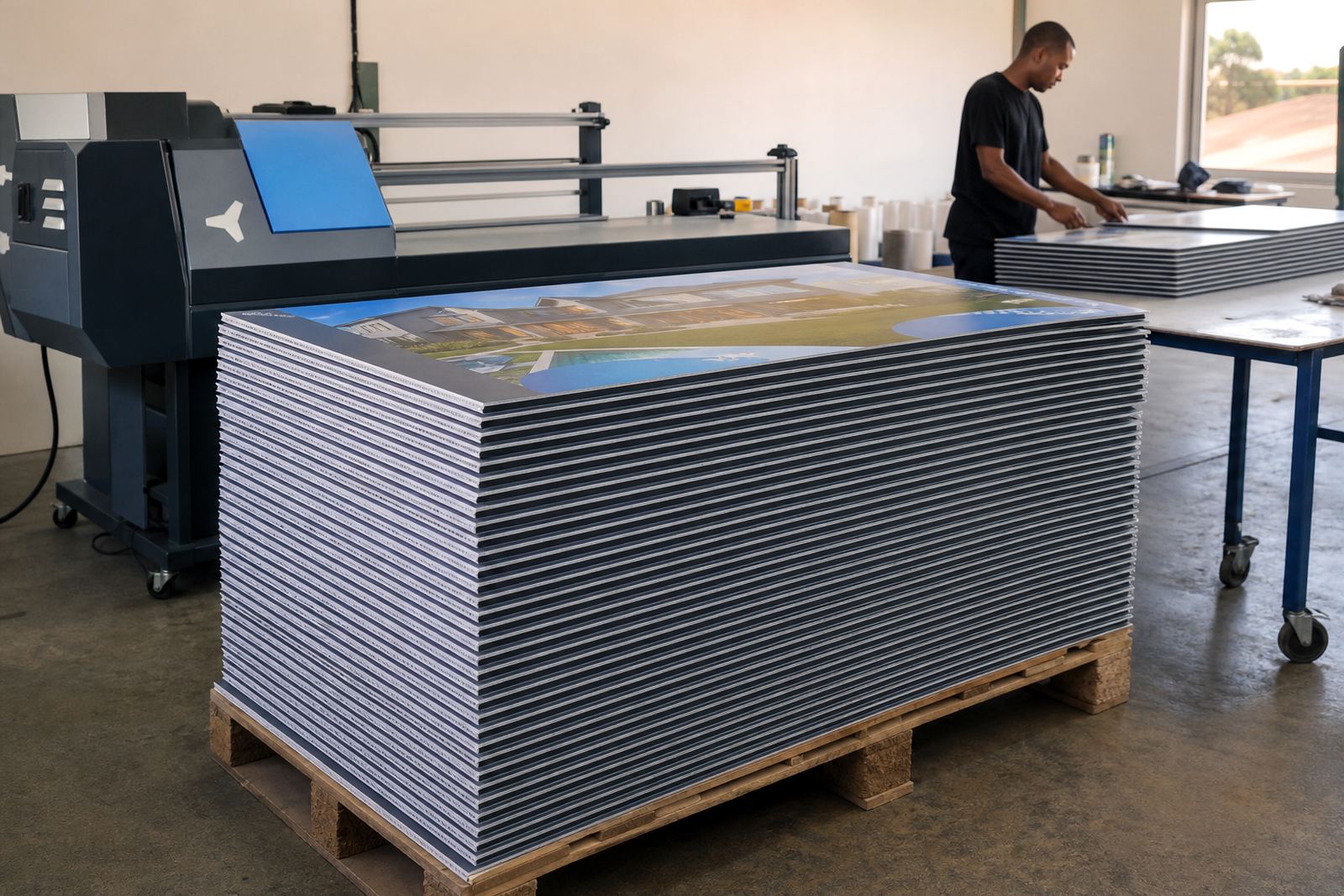
Estate agent boards are usually printed in repeats, with names, sale statuses, phone details, and photos changing from one job to the next. That means the print room needs a workflow that keeps artwork organised, avoids version mix-ups, and lets operators send the right board size without hunting through old folders.
For many shops, the challenge is not only printing the board itself. It is keeping the full process under control from file receipt to final output. InkFlow RIP is used to set up those steps so a team can handle common board sizes, last-minute edits, and multiple branches without the queue becoming messy.
When boards move through the same printers each week, the operator needs predictable nesting, clear file names, and colour that does not drift from one batch to the next. A tidy workflow saves time and reduces reprints, which matters when boards need to leave the shop in a short window.
The printer set that usually sits behind the counter
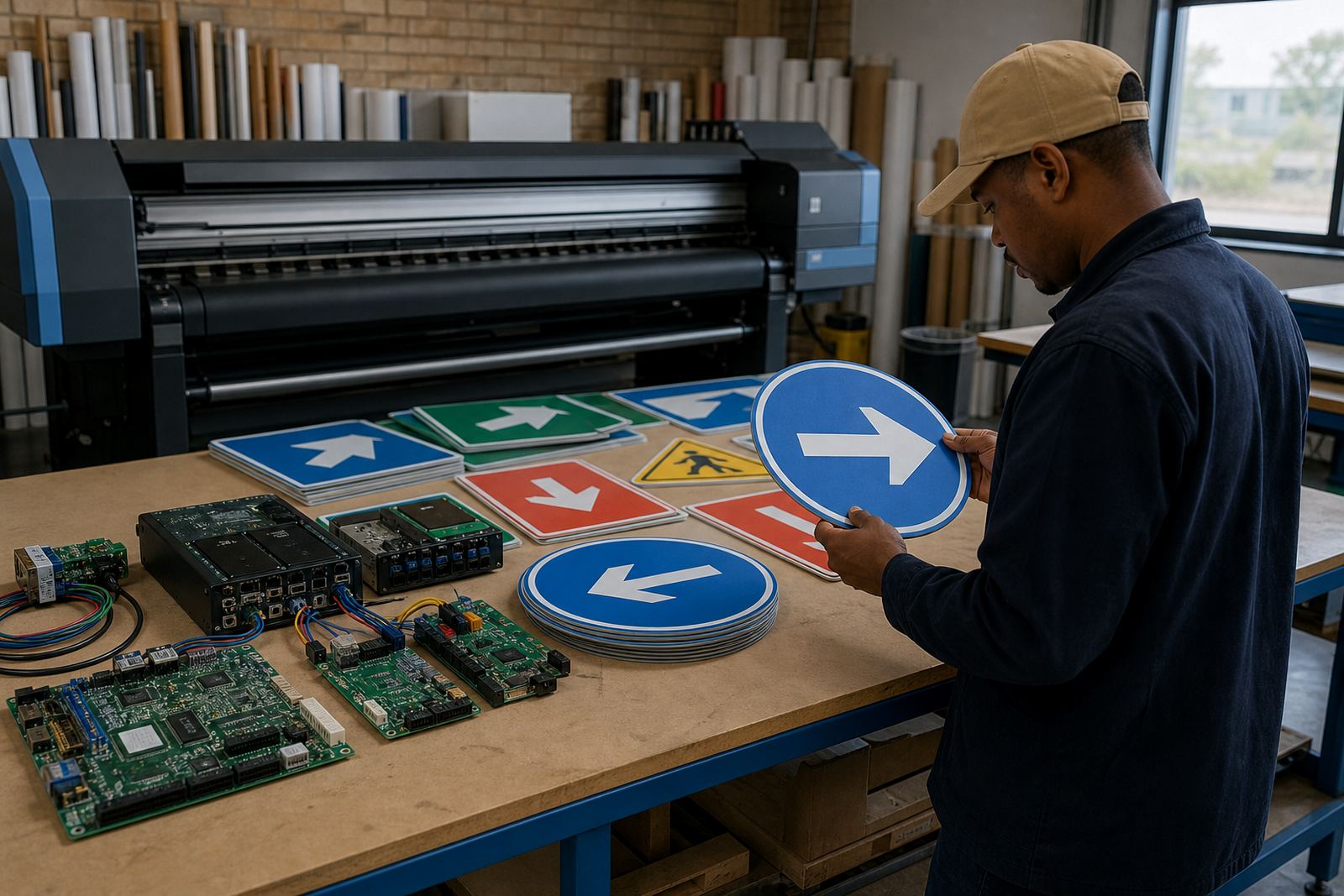
Estate agent board work normally runs on a wide-format inkjet printer with a control board, printhead drivers, and RIP software linked to the shop computer. Some setups use a single production printer, while others keep a second machine ready for overflow or urgent repeats.
Typical equipment in this type of room includes:
- Wide-format inkjet printer with onboard control board
- Printhead driver setup matched to the machine and media
- RIP software for colour handling, queue control, and output management
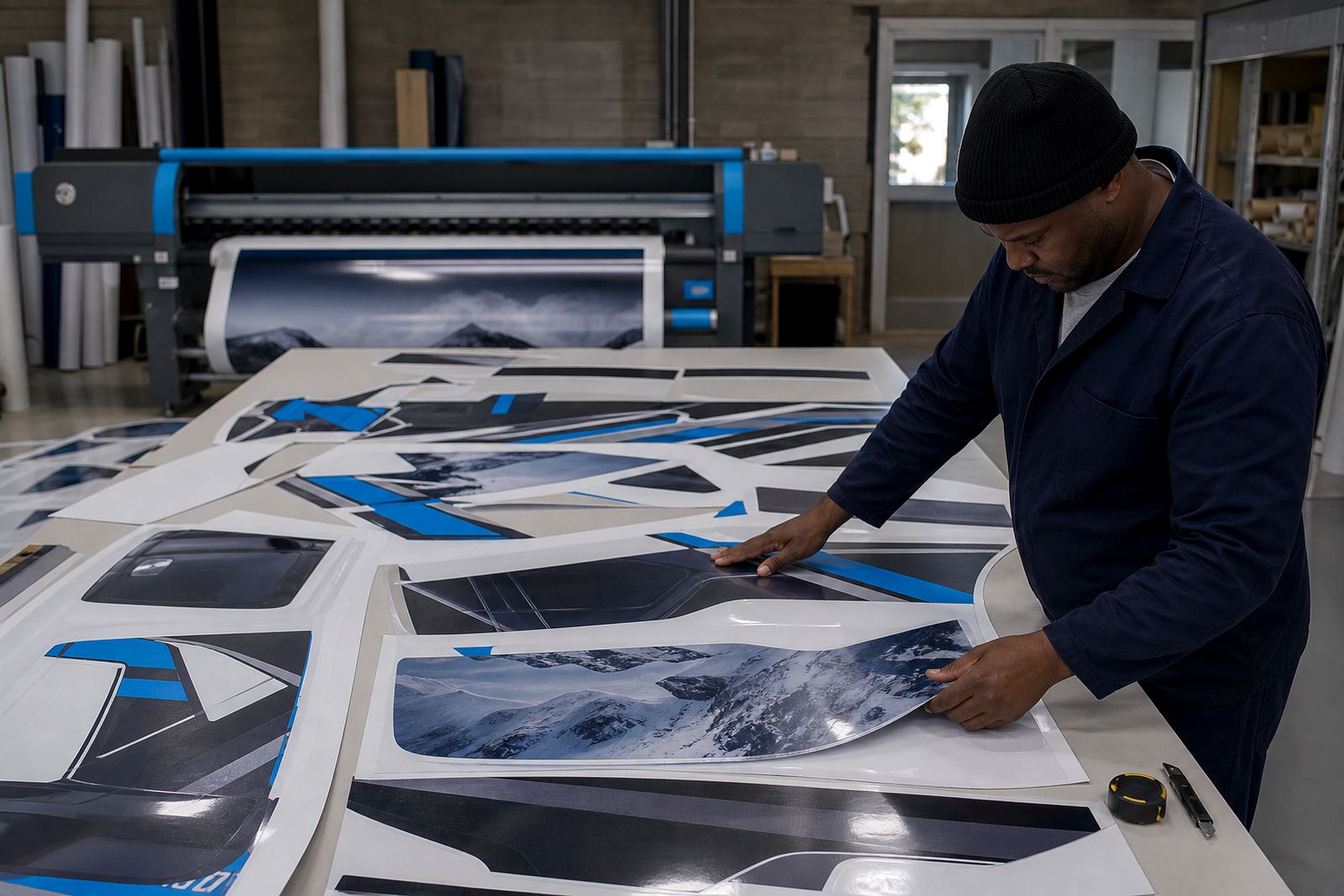
- Cutting table or finishing area for trimming boards to size
- Network storage or local backup for repeat jobs and artwork archives
In coastal towns, humidity can affect media handling and dry times, so profile work and maintenance routines need to account for the local room conditions. In Gauteng, dust and temperature swings can still affect print consistency if the machine is not kept in check.
Planning layouts for repeat jobs and short deadlines
Board graphics work best when the layout is planned for repeat use. That means building templates for common estate board formats, keeping safe margins for logos and contact details, and placing variable text in a way that can be changed without disturbing the full design.
A good RIP setup supports nesting, so multiple boards can be arranged on the media with less waste. It also helps when the operator needs to mix sizes on the same roll, because the job can be queued in a clean order instead of being pushed out one at a time.
For print shops serving Johannesburg, Pretoria, Durban, Cape Town, Bloemfontein and the East Rand, the layout should also allow for simple file handover. Boards often arrive from different agents, different branches, or different designers, and the shop needs a process that keeps each version traceable.
Colour work that keeps boards looking the same
Estate boards are often judged at street distance, but colour still matters. Blue text that shifts too far, pale backgrounds that print muddy, or property photos that come out dull all make the board look tired. RIP colour profiles help bring each printer, ink set, and media type into line.
Colour workflow should cover:
- Media-specific profiles for the board material in use
- Printhead driver settings matched to the printer condition
- Linearisation and ink limits for cleaner output
- Profile checks after maintenance or board changes
- Proofing steps for repeat jobs before full production
When a shop prints the same estate branding over and over, even small shifts become noticeable. A well-set RIP can hold the look steady from one batch to the next, which keeps the board range consistent across branches and suburbs.
Common mistakes that slow the board run
The most common problems are usually practical ones. Files arrive in the wrong size, old artwork gets reused by mistake, colours are converted twice, or the queue is left with leftover jobs from the previous shift. Those issues are small on paper, but they waste media and time when the boards are urgent.
Another frequent mistake is treating maintenance as an afterthought. Printheads that need cleaning, clogged lines, and worn board settings can lead to banding or uneven text. Preventive maintenance on the control board and RIP side helps the operator spot trouble before a full batch is affected.
We also see shops lose time because nobody owns the file naming system. If each estate agent has a different folder style, the team spends longer confirming which version to print. Simple rules for naming, archiving, and reprinting make a real difference in a busy room.
Budget bands for board graphics work in rand
The budget depends on the number of printers, the type of board output, and how much setup is needed on the file and colour side. For smaller estate board rooms, a basic RIP installation and setup can start around R4,500 to R9,500. A fuller workflow with profiles, queue design, and operator training often sits between R12,000 and R28,000.
Where a printer control board needs replacement or repair, the work can move higher depending on the machine and fault. Remote setup, fault finding, and backup recovery are usually priced around the size of the task and the number of systems involved. Shops with more than one branch or repeated board runs usually benefit from a tighter production setup, because the same work gets used every week.
For estate board production, the best value often sits in getting the repeat process right first, then adjusting the machine settings around that workflow.
Support for print rooms from Midrand to the coast
InkFlow RIP works with print shops in Midrand, Johannesburg, Pretoria, Durban, Cape Town, Bloemfontein, the East Rand and the West Rand. Support covers RIP installation, board installation, remote setup, printhead driver setup, colour profile setup, queue workflow design, fault finding, preventive maintenance, operator training, production tuning, backup and recovery, and ongoing support.
Our team is led by Thabo Zungu, with Lerato Khoza handling operations, Johan Letsoalo on senior RIP work, Zanele Moagi on colour workflow, Aiden Phiri on remote support, Kagiso Pienaar on board repair, and Bianca Rademeyer on client training. That mix helps when a shop needs both the technical side and the day-to-day production side sorted out.
Clients reach us through the enquiry form on our contact page when they need help with estate board runs, repeat jobs, or printer control issues. The work is often straightforward, but it needs a clean setup behind it, otherwise the same board keeps causing the same problems.