
A school signage run that had to stay neat across many repeats
The client was a print provider in Roodepoort handling school signs for a mix of primary and high school work. The brief was straightforward on paper, but the day to day production needed more control: the same headings, the same colour blocks, and the same panel sizes had to hold steady from one order to the next.
They were producing directional signs, safety notices, sports notices, house boards, and event boards. Many pieces were re-used with only small text changes, so the workflow needed to support repeat layouts without old settings drifting. There was also a practical issue with colour matching across different print runs, especially on coated and uncoated substrates.
The production pressure behind the brief
The shop wanted a cleaner path from file to print because school jobs often arrive in batches. One file may need to become a 600 mm by 900 mm board, then a smaller 297 mm by 420 mm notice, with only the wording changed. When the layout is copied by hand each time, small shifts in margins, colour values, and cut marks can creep in.
There were also environmental issues common to Gauteng print rooms. Dust, heat, and dry air can affect static, board feeding, and edge handling. On larger runs, a loose workflow can waste material fast, especially when operators are balancing multiple machines at once.
- Repeat artwork needed locked margins and trim positions.
- Colour needed to stay close across several print batches.
- Operators needed fewer manual steps between jobs.
- Templates had to suit common school board sizes.
What we set up on the RIP side
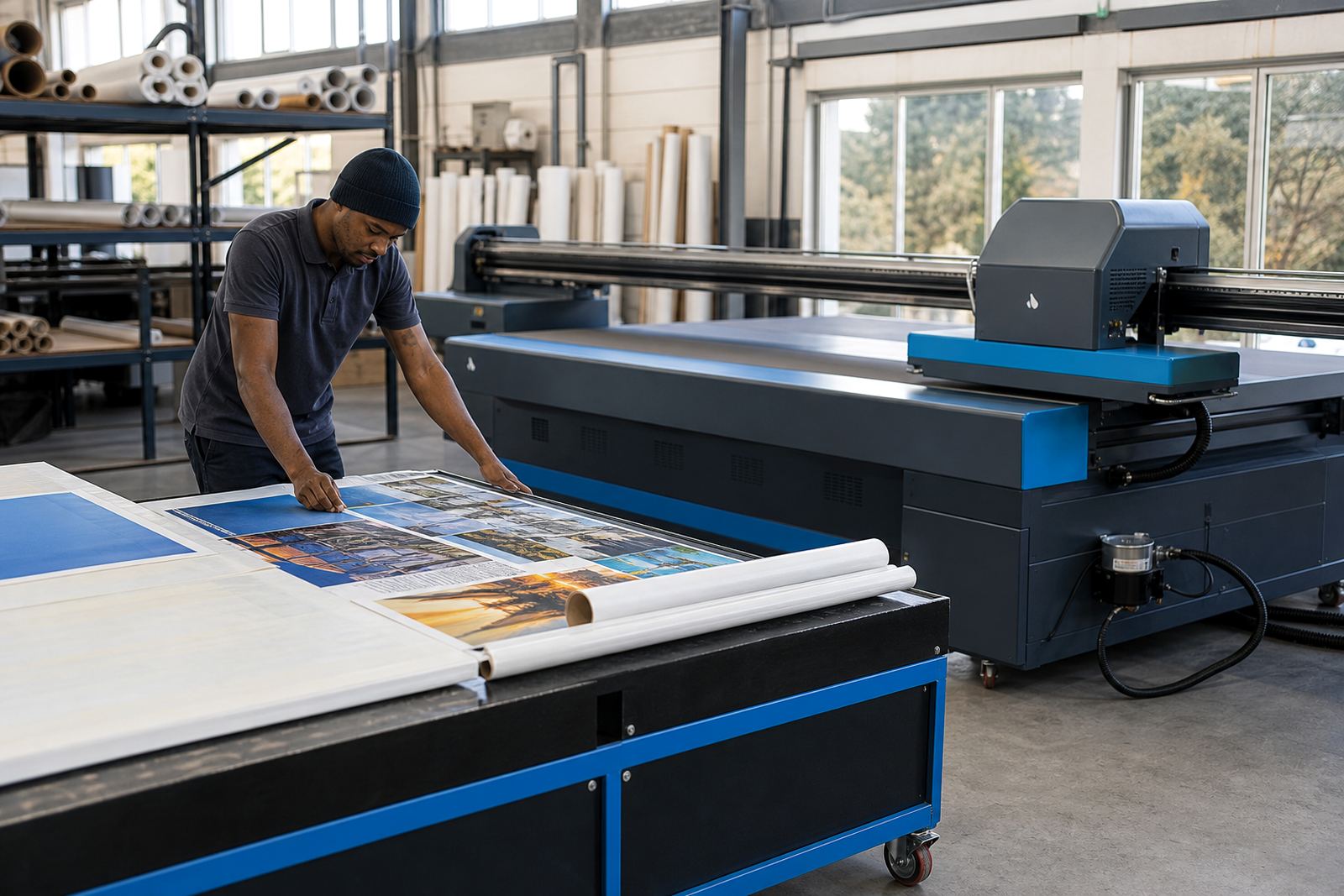
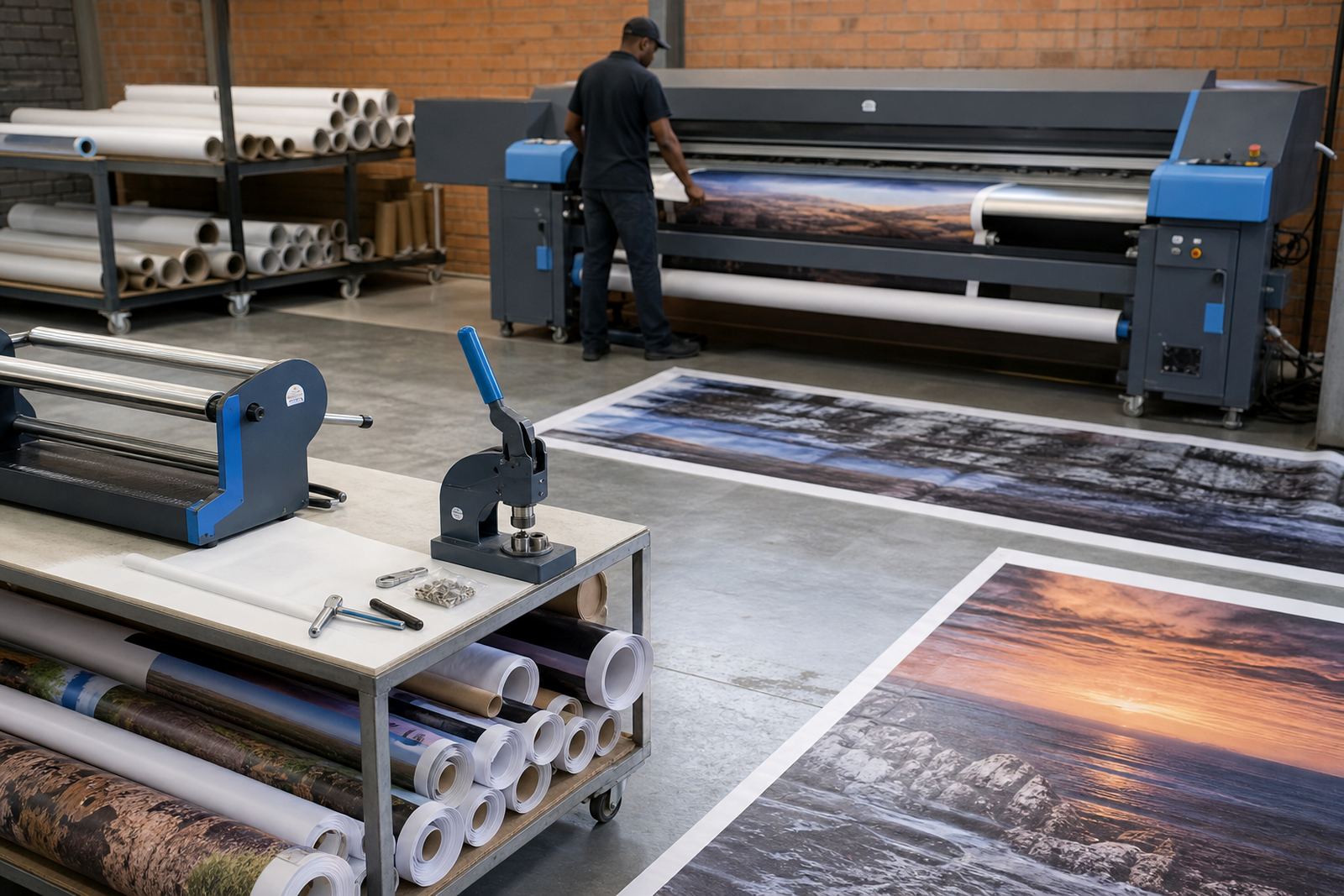
We worked on the RIP setup, queue structure, and colour profile handling so the print provider could process school signage with less rework. The job used dedicated print queues for common board sizes, with saved settings for resolution, pass count, media type, and drying allowance. That made it easier to move from a short-run notice to a full board without rebuilding the setup each time.
We also set up printhead driver checks and a maintenance routine around nozzle health, feed consistency, and job nesting. On the software side, we aligned the colour workflow so common reds, blues, and dark text areas stayed more predictable across reprints. The operator team could then keep the files moving without second guessing each stage.
- Queue profiles for standard school sizes and reprints.
- Colour profiles for coated and matte school board stock.
- Nesting rules for grouped notice board jobs.
- Maintenance reminders for head checks and test patterns.
Remote setup with room for the shop floor
The setup was handled remotely with the print room team in Roodepoort. We guided them through board installation checks, RIP configuration, and output verification while they stayed on the production floor. That approach suited the job because the client did not need a full replacement of hardware, only a tighter software and workflow layer around what they already had.
We kept the focus on practical steps the team could use every week. File naming was cleaned up, the operator handover was shortened, and the main school templates were stored so they could be reopened with less risk of accidental changes. The result was a more disciplined print routine without making the process heavy or awkward.
Timeline and job facts on the ground
The project ran over 3 weeks from first review to final sign-off of the setup. The first stage was a review of sample artwork and existing print output. The second stage covered queue design, colour profile work, and template preparation. The last stage was operator training and a short test run with live school signage files.
The most useful changes were practical rather than flashy. The team gained a clearer path for repeat jobs, a steadier way to check colour, and a better method for handling different board sizes without rebuilding the job from scratch. For a busy print provider, that sort of order in the workflow makes a real difference when the week fills up fast.
- Location: Roodepoort, Gauteng.
- Job type: School signage production support.
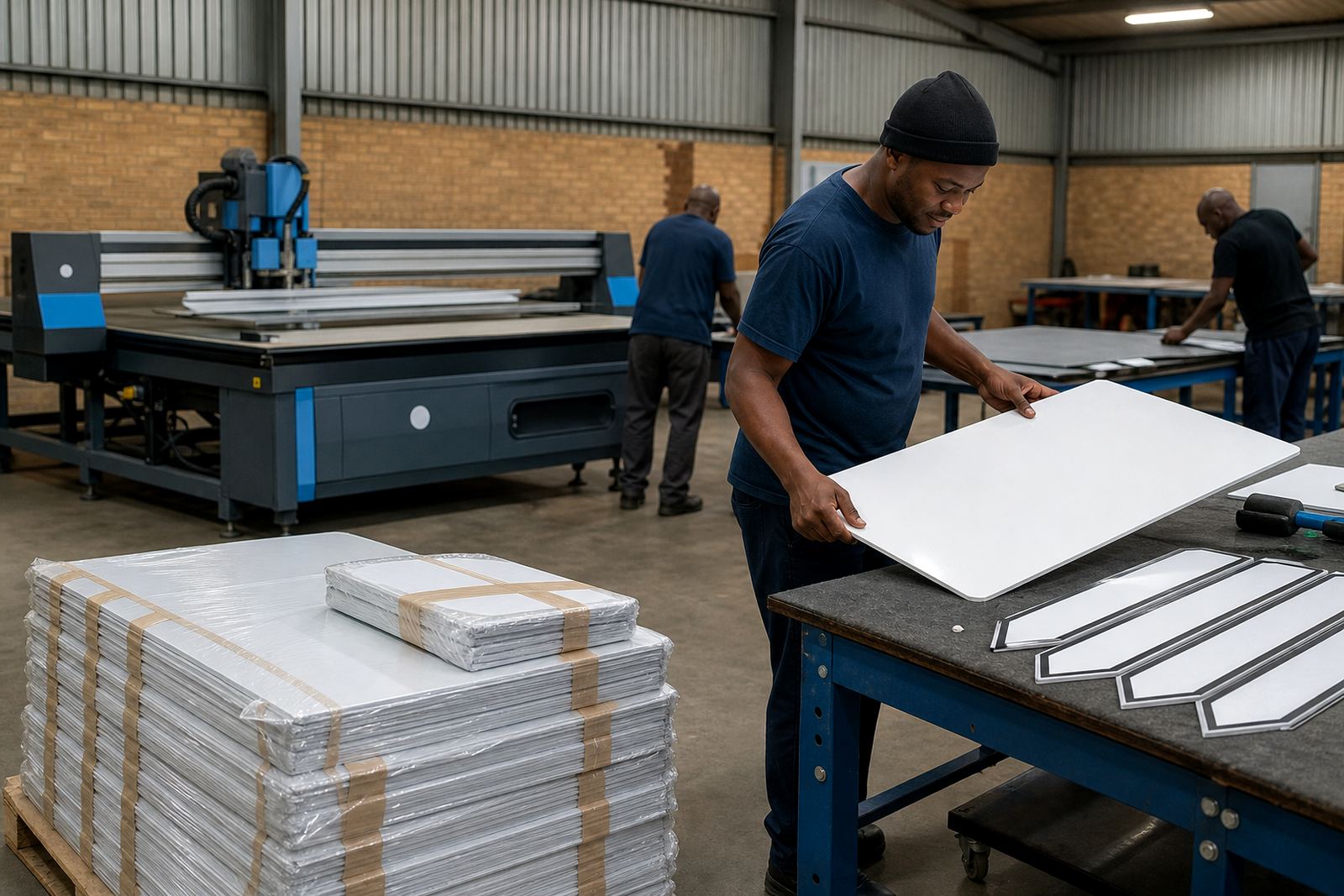
- Output sizes: Small notices to 600 mm by 900 mm boards.
- Workflow focus: Repeat templates, colour checks, and queue control.
The result on repeat school orders
After the setup, the client had a cleaner method for repeat school signs and fewer delays caused by manual adjustments. Colour checks became more consistent from one run to the next, and the shop spent less time rebuilding common layouts. That mattered most on weeks when several schools sent similar requests at once, each with slightly different wording but the same visual structure.
The production room also had fewer reasons to stop and verify basic settings before each batch. That gave the team more confidence when moving between signs for events, safety notices, and classroom or admin boards. The files were easier to keep in line, and the final output looked more settled across the full set.
If a similar project lands on the floor again, we would keep the same order of work: review the file pattern first, then lock the repeat settings, then train the operators on the saved queues and colour checks. That sequence keeps the changes practical and avoids turning a routine school signage run into a messy hand edit every time.
Key facts
| Client type | Print provider handling school signage |
|---|---|
| Town | Roodepoort, Gauteng |
| Timeline | 3 weeks |
| Main services | RIP Installation, Colour Profile Setup, Queue Workflow Design, Remote Setup, Operator Training |
| Key formats | School notice boards, directional signs, sports signs, safety boards |
| Print sizes | From small notices to 600 mm by 900 mm boards |