Mixed boards, mixed rolls, little room for waste
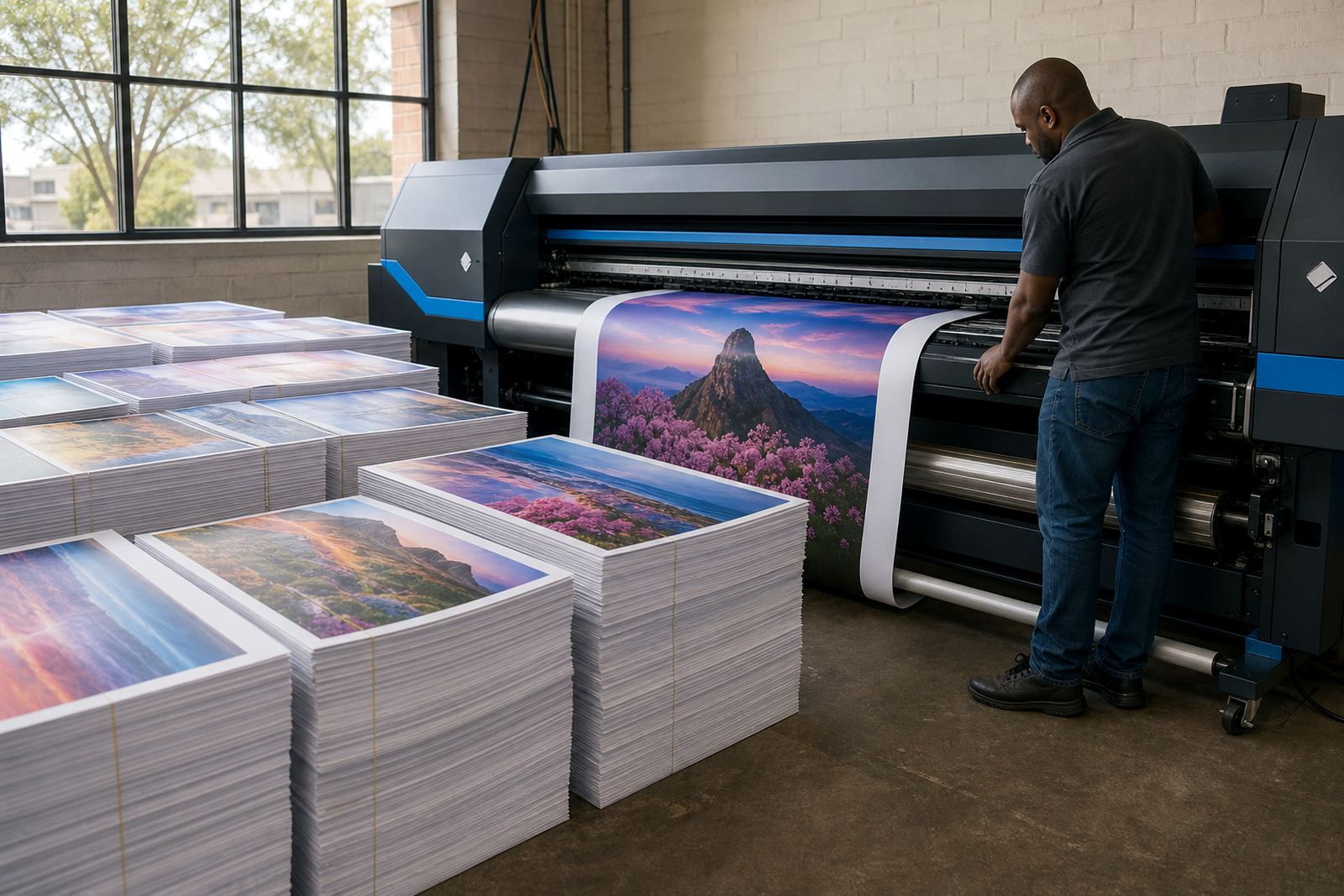
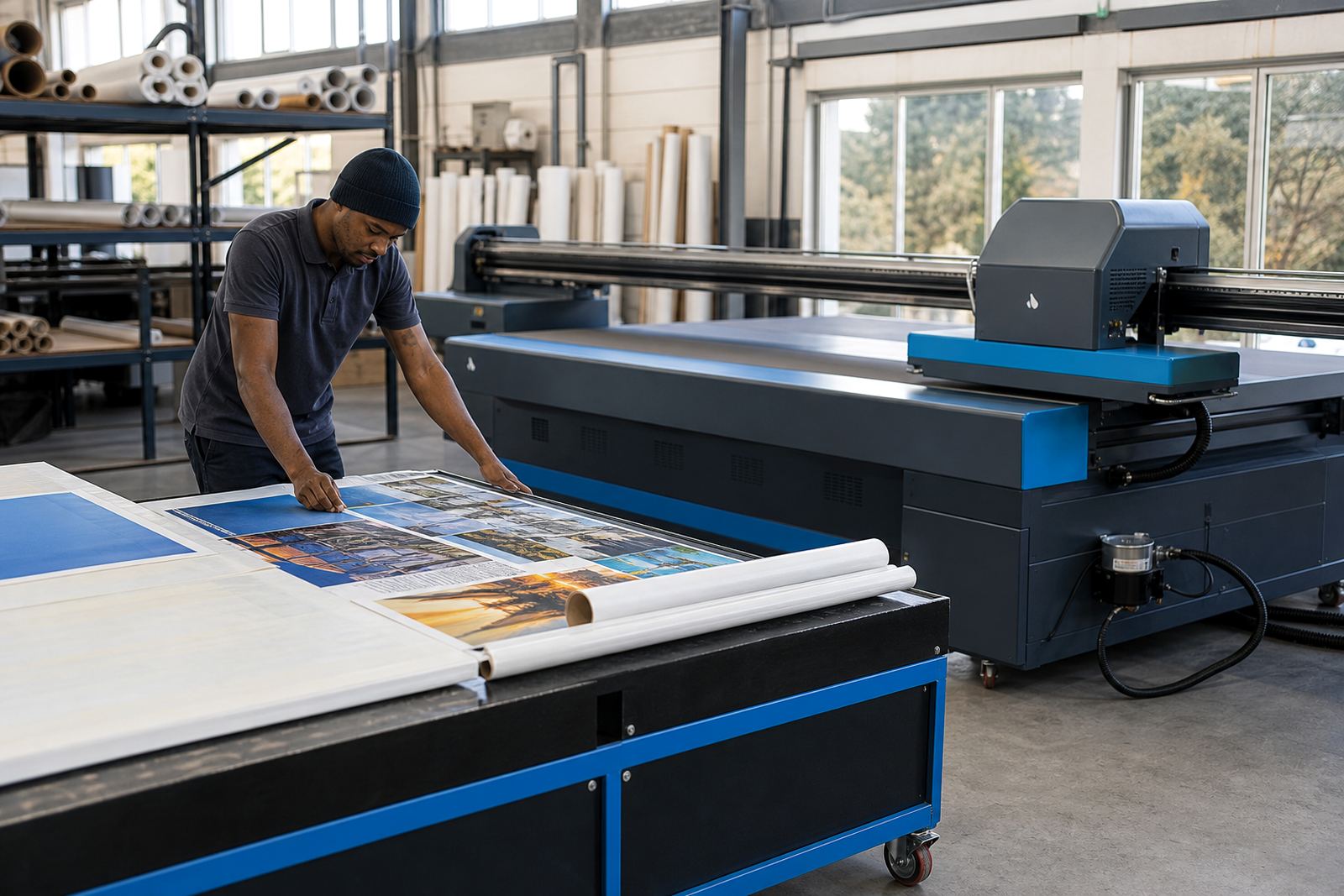
The shop handled display work for retail, exhibitions and indoor signage, so one day could include rigid board panels, the next day roll-fed artwork, then a run of small reprints and sampled pieces. That mix put pressure on the nesting layout. Offcuts were building up, the print room had to keep checking file order, and the team wanted a cleaner way to place multiple jobs on the sheet without wasting material.
The brief was practical. Improve nesting for mixed jobs, keep colour handling stable across different file types, and make the workflow easier for the operator on shift. The print room works in Cape Town, where coastal humidity can affect storage and handling, so the setup also needed sensible maintenance steps and a repeatable file routine. No one wanted a fussy process that only one person could run.
- Client type: display graphics shop
- Town: Cape Town, Western Cape
- Job type: mixed wide-format production
- Main issue: media waste on varied job sizes
File flow, nesting logic and colour control
We mapped the work from incoming artwork to final print queue, then adjusted the RIP settings to suit their regular media sizes and panel dimensions. That included nesting rules for repeated jobs, rotation control for tighter placement, spacing allowances for cutter marks and a queue order that reduced unnecessary stops. The team also needed clearer colour control because the shop worked across different substrates, and some jobs were more sensitive to tone shift than others.
As part of the setup we reviewed printer control board communication, printhead driver settings, colour profiles and maintenance reminders. The operator wanted a process that could be followed on a busy floor, so the menus and presets were simplified where possible. We also checked how the job files were named and grouped, because a neat naming rule helps when several orders land together and the team is under pressure to move jobs through the press. The result was not flashy, just cleaner output and less second guessing.
- RIP installation and queue workflow design
- Colour profile setup for mixed media
- Printhead driver setup and board checking
- Operator steps for nesting, layout and reprints
Three weeks from review to stable production
The project ran over three weeks. The first week was for review and setup planning, with remote checks on their current print paths, file naming, and output behaviour. In the second week we carried out the RIP installation, board configuration and profile work, then tested mixed jobs with different sizes on the same sheet. The final week focused on production tuning, fault finding and operator training, using live jobs rather than sample files where possible.
The shop needed a setup that could hold steady through a normal production run, not only on a test file. We made sure the nesting method worked for small display panels, long narrow strips and larger sheets in the same queue. During testing we also looked at maintenance routines, because dust, ink build-up and unattended settings can throw off output and waste media if they are left too long.
- Week 1: review, queue audit and workflow planning
- Week 2: RIP setup, board checks and profile work
- Week 3: live testing, tuning and training
What the shop noticed on the floor
Once the new nesting rules were in place, the team could place more work onto each sheet with less manual rearranging. That cut down on trimmed scrap and reduced the number of times an operator had to stop and rebuild a queue. For a display shop, that matters because material cost sits right in the middle of every job and the mix changes from one order to the next.
The colour workflow also became steadier across repeat runs. The operators had clearer profile choices, and the RIP handled common job types with fewer ad hoc changes. There was less confusion around which preset to use for which board or roll job, which helped the print room keep moving. Nothing in the process was complicated, but the small changes added up through the week.
- Less media waste on mixed-size sheets
- Cleaner repeat placement for short runs
- Fewer manual layout changes in the queue
- More consistent colour handling between jobs
Remote support that fits a South African print room
Because the client serves work across Cape Town and beyond, remote support mattered as much as the initial setup. We kept the system practical for a South African production environment, with support for Midrand, Johannesburg, Pretoria, Durban, Cape Town and Bloemfontein clients who need help on the RIP side without having to shut down a full shift for minor changes. The print room team could stay focused on output while the workflow settings did the heavy lifting.
Our work also included backup and recovery guidance, so the shop had a clear way to protect their queues, profiles and settings before changes were made. That is useful when a busy floor has different people handling the same machine over the week. The less time spent guessing at settings, the easier it is to keep production steady.
- Remote setup and support for production teams
- Backup and recovery guidance for RIP settings
- Queue and profile structure that is easy to follow
- Support suited to mixed-job print rooms
What would be carried into a similar Cape Town job
For a similar display print setup, we would keep the same order: review the job mix, clean up the queue structure, test nesting with real sheet sizes, then train the operator on the exact workflow in use. The important part is to work from the media the shop actually buys and the artwork they actually receive. That is where waste shows up, not in theory.
We would also keep the maintenance steps close to the operator notes, because print rooms in Cape Town deal with humidity, storage changes and busy production cycles. A stable RIP setup is only useful if the team can use it every day without hunting through settings. A clear layout, a sensible profile set and a tidy backup plan make the whole floor easier to run.
- Start with real jobs, not sample files
- Test nesting on the media sizes used on site
- Keep operator notes beside the active presets
- Store backups before any major setting change
Key facts
| Client type | Display graphics shop |
|---|---|
| Town | Cape Town, Western Cape |
| Project length | 3 weeks |
| Core focus | Nesting improvement for mixed wide-format jobs |
| Supplied | RIP setup, board checks, colour profiles, training |
| Support method | Remote setup and ongoing production support |