
Heat control for print zones that must stay steady
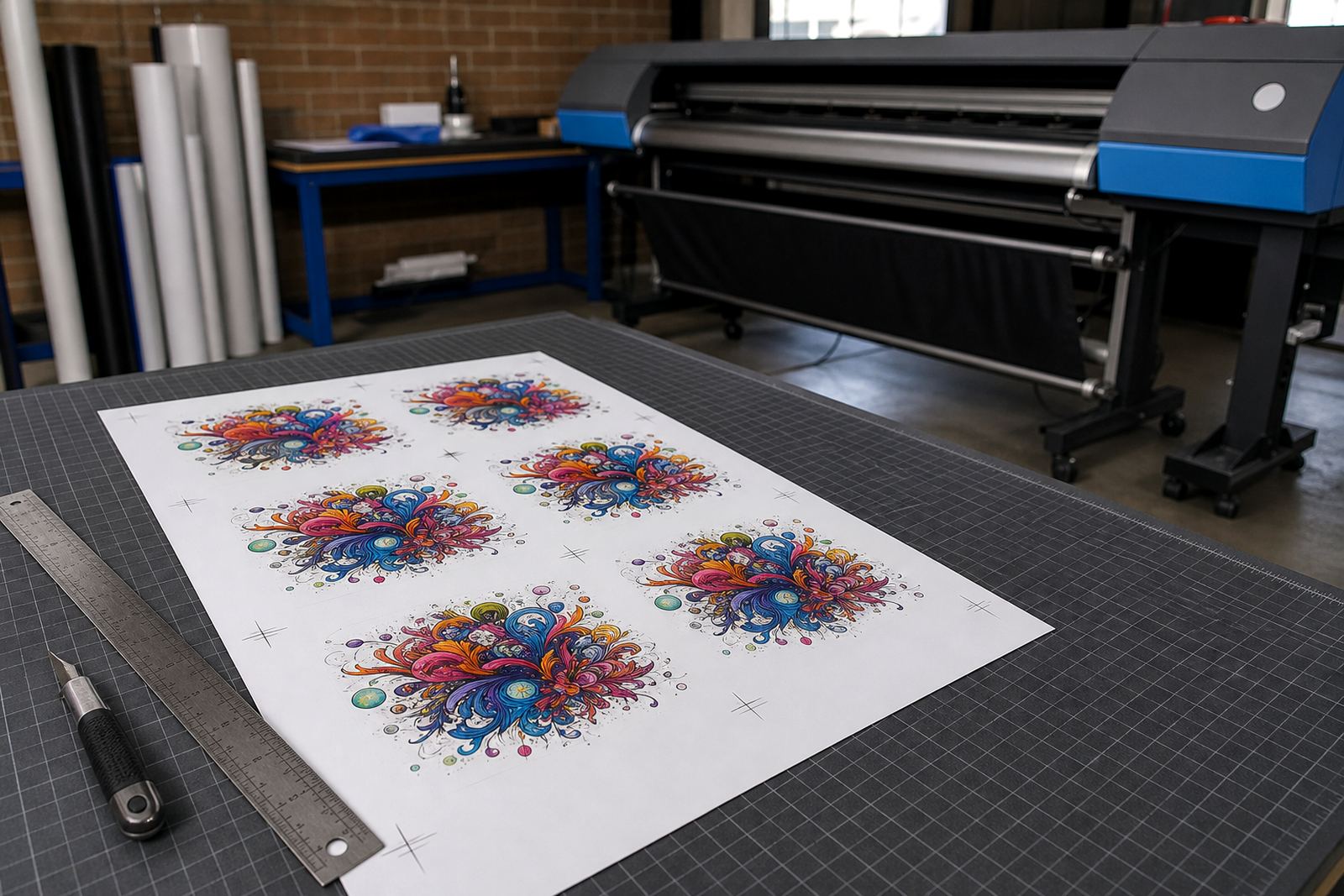
A heater control board sits in the printer's control path and manages the heat output for pre-heat, platen and post-heat zones, depending on the machine layout. In practical terms it helps the media take ink more evenly, reduces cockling on heavier stocks and keeps the sheet or roll moving at a steadier tension through the print zone. On machines used for banners, vinyl, self-adhesive media and coated papers, stable heat control can make a real difference to drying behaviour and edge hold.
For wide-format inkjet systems, the board is usually matched to the printer's existing wiring, sensors and zone count. Some setups use a simple single-zone arrangement, while others need separate control for multiple heaters and feedback from thermistors or similar temperature sensors. We supply boards for printer control environments where the operator needs accurate temperature management without constant manual adjustment and the board has to fit into daily production, not sit as a special-case spare.
If a print shop is dealing with waviness, slow curing at the edges or heat that drifts during long runs, the control board is often part of the fault tree. It is worth checking the board before chasing media settings or RIP changes, because a weak control signal can show up as a print-handling issue or an unstable heat band across the job.
Board formats, zone counts and interface details
Heater control boards are not all built the same. The right unit depends on the number of heat zones, the type of sensors used, connector layout and whether the printer uses relay switching, solid state output or another control method. Some boards are made for compact production machines, others for larger flatbed or roll-to-roll units with broader heater coverage. Matching the board to the machine saves time on fitting and avoids awkward cable changes.
Common options include replacement boards for single or multi-zone heater control, driver boards for specific heater sections and boards that work with external control modules. Where a machine uses a separate printhead driver system and RIP workflow, the heater board must still sit cleanly alongside the rest of the control stack. A tidy control chain matters because heat, feed rate and print timing all affect how the media behaves under pressure.
- Single-zone and multi-zone heater control layouts
- Temperature sensor inputs for common print path arrangements
- Relay or switched output configurations, depending on the machine
- Compact boards for space-limited control cabinets
- Options suited to roll-to-roll and flatbed wide-format printers
When the original board has failed, a replacement should be checked against the existing harness, terminal layout and voltage requirement before fitting. A board that looks similar can still differ in pin order or sensor mapping, so a careful match saves the operator from chasing avoidable faults.
Where the board fits into South African print work
In Johannesburg, Pretoria, Durban, Cape Town and Bloemfontein, the common thread is production pressure. Print shops want clean drying, stable feed and fewer stops during long runs. Heater control boards suit large-format inkjet printers used for outdoor signage, exhibition graphics, fleet work and wall media where drying time and handling stability affect finishing. Coastal humidity in Durban and Cape Town can make heat control even more noticeable, especially on heavier coated media or when rolls are moving straight into cutting and lamination.
These boards also suit production rooms that run different media types in the same week. One day may be PVC banners, the next self-adhesive vinyl or backlit film, and the heater settings need to respond without constant tweaking. A well-matched control board supports that shift by keeping the heating sections within the printer's working range and reducing erratic behaviour when jobs run back to back.
Midrand operations often want remote support as part of the supply, especially when a machine is down and the fault sits in control logic rather than in the print engine itself. We work with print shops across Gauteng and further afield, including East Rand and West Rand sites, where a board replacement may need coordination with existing RIP settings, machine calibration and operator checks before full production resumes.
Fitting, wiring and setup that need attention
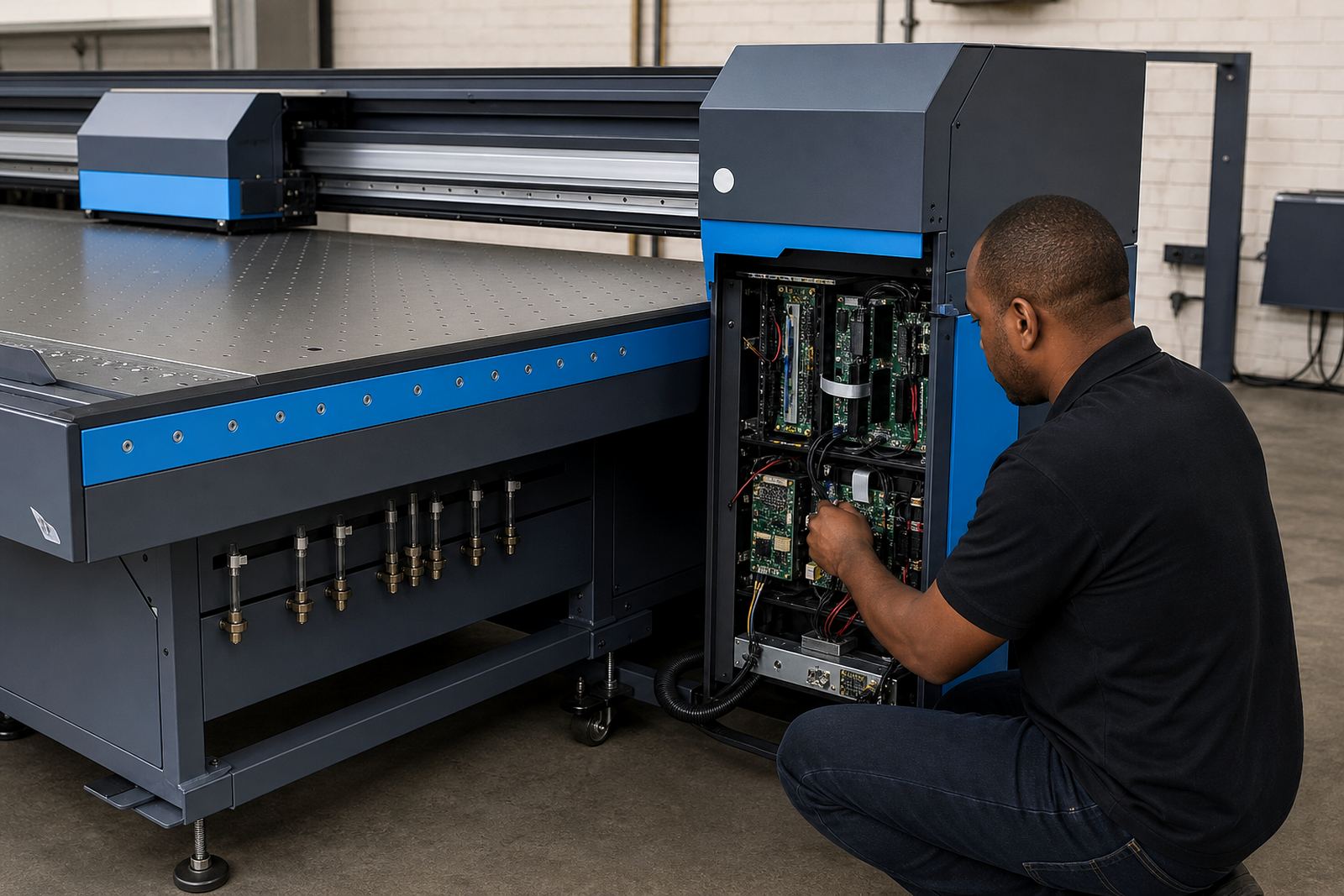
Installation needs to be handled with care because heater boards sit in a live control environment and can be affected by poor earthing, loose connectors, heat damage or incorrect sensor readings. A proper fit means confirming the connector layout, securing the board in the control cabinet, checking cable strain and verifying that each heat zone is reading correctly once powered. If the printer uses separate print zones, each one should be tested in sequence so that one fault does not get hidden by another.
Where the board interfaces with the printer's main control system, the fitting process may also include checking firmware compatibility and ensuring the control signals are understood by the machine. On some units the board is part of a bigger service job that includes printhead driver setup, queue workflow review and fault finding on the RIP side too. It is best to treat the heater control board as part of the full production chain, not as a loose spare with no context.
- Confirm the printer model and heater zone count
- Check board voltage and sensor type before fitting
- Match the terminal layout to the existing harness
- Test each zone after installation under normal operating settings
- Review media feed and drying behaviour during a live run
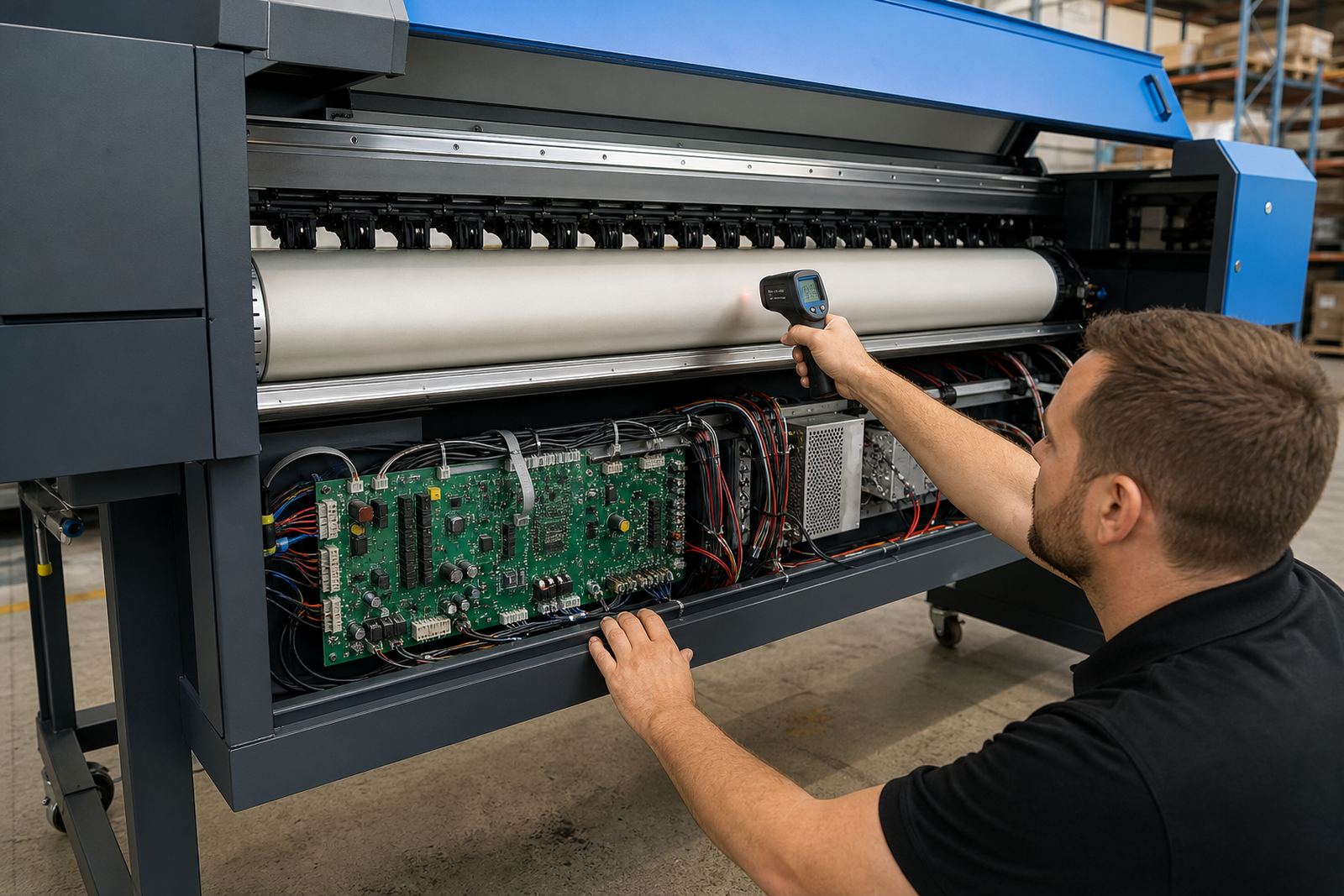
For sites with repeated fault history, preventive maintenance can include cleaning cabinet dust, checking fan flow, looking for heat discoloration on plugs and verifying that cable routing has not become pinched. A board can only do steady work if the surrounding parts are in decent order as well.
Care that helps the board last through production shifts
Heater control boards work best when the cabinet stays clean and dry, with enough airflow around the heat-related components. Dust buildup can make heat soak worse, especially in enclosed rooms where printers run for long shifts. If the machine sits in a busy production area, keep paper trimmings, vinyl offcuts and adhesive residue away from the control cabinet so that connectors stay clean and readable.
Operators should watch for signs such as uneven heating, unexpected temperature swings, fault messages tied to sensor readings or a heater zone that takes longer than usual to reach target. These symptoms do not always point straight to the board, but they are worth logging before the machine is pushed into another large job. When a board is paired with good colour profile setup and sensible production tuning, the printer tends to hold its settings more consistently through the week.
Some shops fold board checks into their maintenance schedule along with printhead driver setup, backup and recovery of machine settings, and operator training on start-up routines. That small bit of discipline can prevent avoidable stoppages, and in a busy shop that saves more than one kind of waste.
Details to confirm before ordering the right board
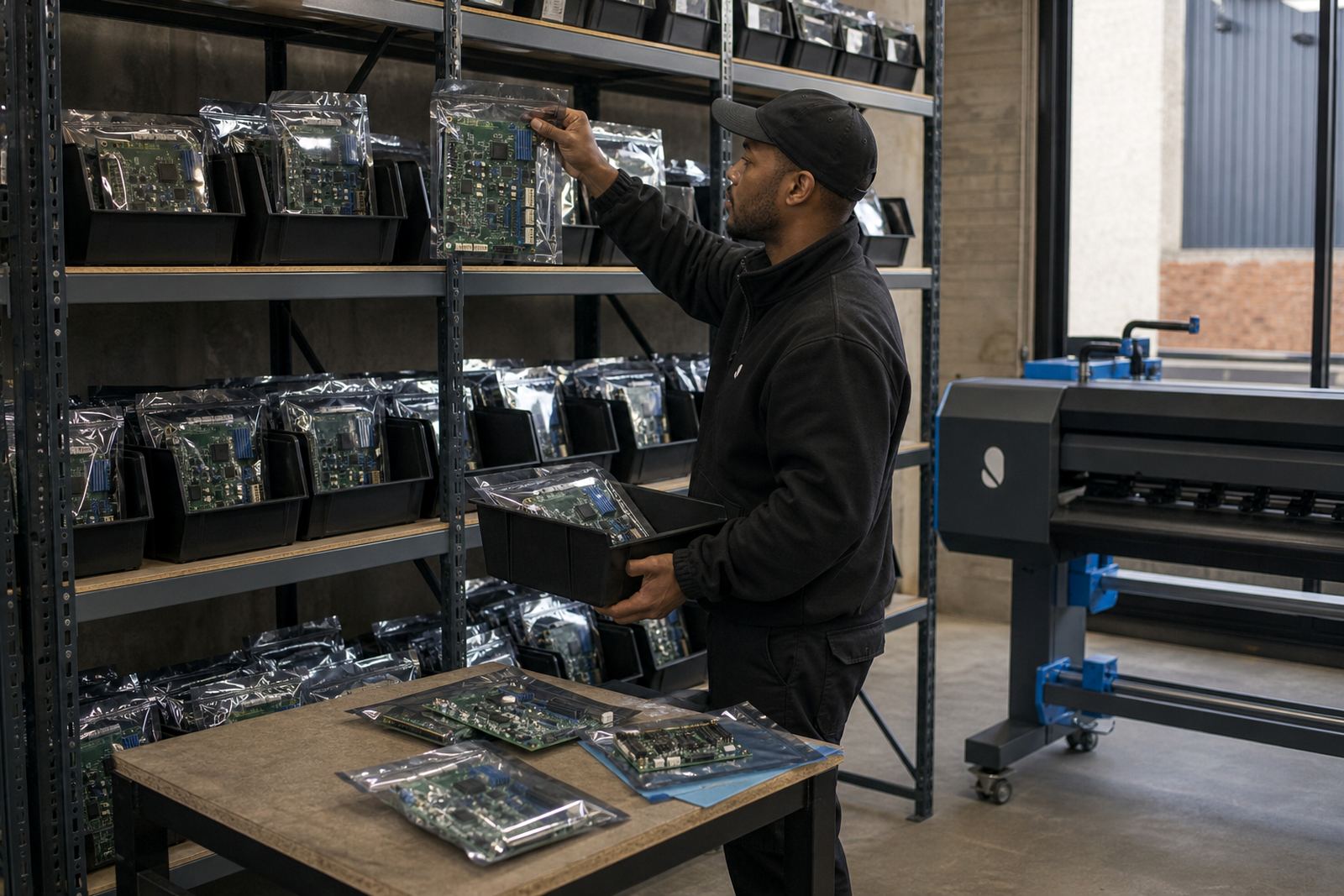
For the correct heater control board, we need a few details from the printer and from the existing control setup. The exact machine model matters, but so do the number of heater zones, sensor type, connector style and the voltage rating used by the printer. If the board is being replaced after a fault, a photo of the old unit and the terminal side can help confirm the layout and avoid a mismatch.
It also helps to note whether the printer is a roll-to-roll, flatbed or hybrid unit, because the board arrangement and temperature control pattern can differ. In some cases the machine may need board repair rather than full replacement, while in others a direct replacement is the cleaner option. If the fault showed up after a power issue or a cabinet overheat event, that detail should be included too, as it points the technician toward the right checks first.
- Printer make and exact model
- Number of heater zones and sensor inputs
- Voltage requirement and output style
- Connector photos, if the old board is available
- Machine type, such as roll-to-roll, flatbed or hybrid
- Any fault message, heat drift or uneven drying symptoms
InkFlow RIP supports print shops from Midrand and across South Africa with heater board supply, remote setup and the sort of practical technical detail that keeps wide-format production moving. When the board matches the machine properly, the heat zones settle into a more dependable rhythm and the rest of the workflow has a better chance of staying on track.
Key facts
| Product type | Heater control board for wide-format inkjet print zones |
|---|---|
| Function | Manages pre-heat, platen and post-heat sections |
| Compatibility | Roll-to-roll, flatbed and hybrid printer control systems |
| Control method | Relay or switched output, depending on machine layout |
| Sensors | Thermistor or similar temperature sensor inputs |
| Supply region | Midrand, Gauteng and nationwide remote support |